
Quick Summary
This article compares RB2B and 14 other alternatives to Cognism, including ZoomInfo and Lusha. It highlights their features, pricing, pros, and cons to help B2B sales teams choose platforms that support insightful decision-making and easy adoption.
Why Look Beyond Cognism?
Cognism is widely known for helping teams prioritize compliant contact data and large databases. However, it is not the right tool for everyone. Many sales teams need simpler workflows, faster signals, and advanced tools for heavy setups. This causes teams to explore other alternatives to Cognism.
Some teams need more affordable options, while some require real-time buyer signals that easily integrate into daily sales workflows. In this article, we compare 14 alternatives to Cognism to help understand and choose the option that makes sense for your sales team.
Why Listen to Us?
At RB2B, we provide accurate, easy-to-use B2B data designed for fast adoption and practical sales execution. Based on our hands-on experience with B2B data and intent platforms, we have evaluated effective alternatives to Cognism
What is Cognism?
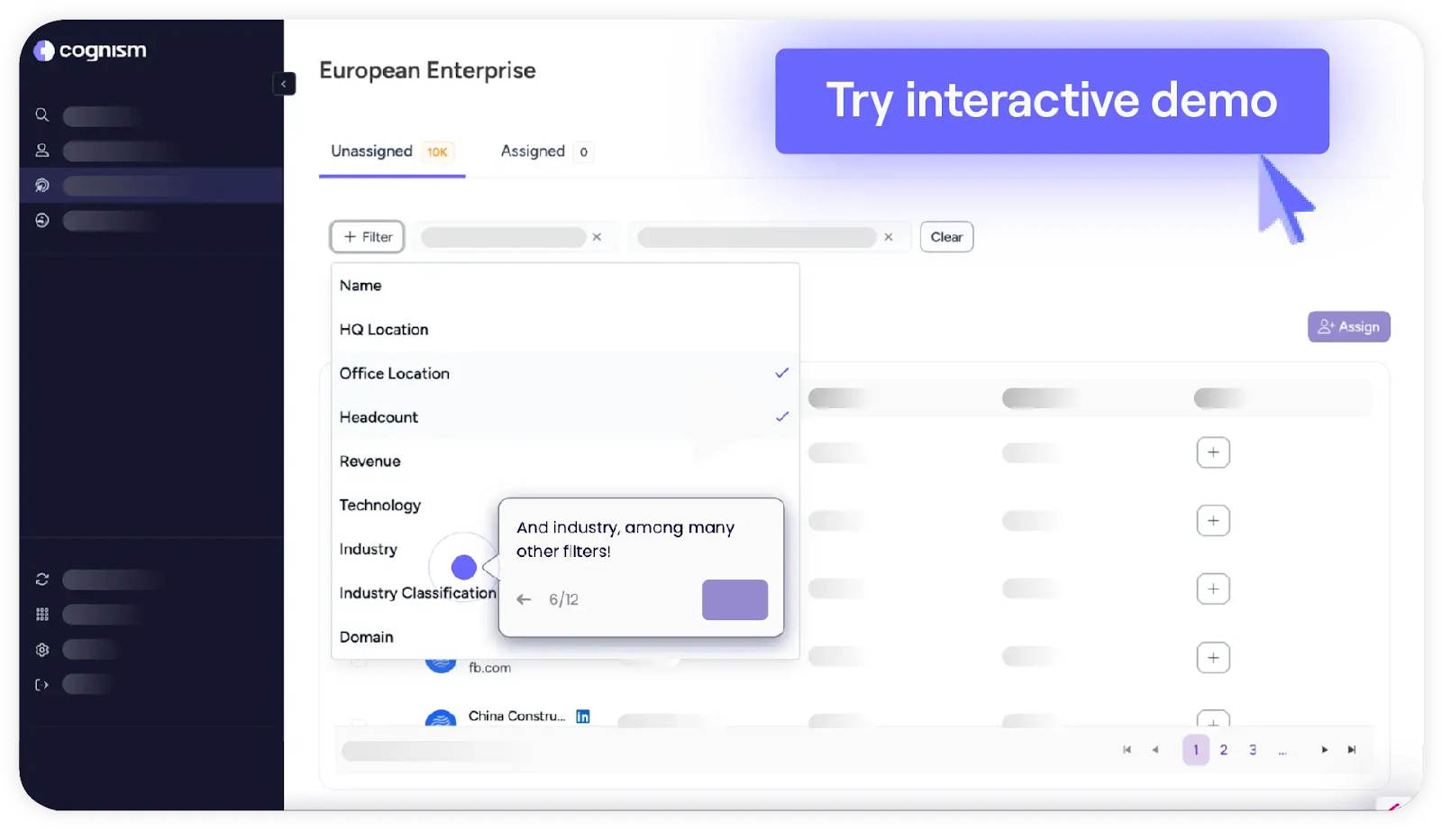
Cognism is a sales intelligence platform used by revenue teams to connect with potential buyers by providing accurate and relevant company and contact data. B2B sales teams use Cognism to identify buying signals, enrich data, support sales-led growth, and prospect and execute outbound sales.
Key Features
- LinkedIn Extension: Cognism’s LinkedIn browser extension allows users to enrich profiles directly from LinkedIn and Sales Navigator.
- Contact and Company Data: The platform provides access to business emails, mobile numbers, firmographics, and company insights.
- Data Enrichment: Cognism enriches existing CRM records by filling in missing contact and company fields.
- CRM Integrations: Cognism integrates with CRMs like Salesforce and HubSpot.
Pricing
Cognism pricing is not publicly listed, as it is tailored to your business needs.
Pros
- Strong GDPR compliance
- High data accuracy, particularly for European contacts
- Useful LinkedIn extension
Cons
- Weaker data coverage outside Europe
- No transparent pricing
- Occasional data gaps for smaller companies
- Interface performance issues reported by some users
Why Should You Look for a Cognism Alternative?
Generally, Cognism is a powerful B2B sales intelligence platform. However, as teams and organizations scale, many realize that they have outgrown a single solution platform. This is why several sales teams actively seek alternatives to Cognism that best fit their workflows and budgets.
1. Limited Data Coverage
If your target audience is primarily North America and APAC, then Cognism might not be the right fit, as you may find data gaps frustrating.
2. Lack of Transparent Pricing
Cognism may not be the right fit if you need transparent pricing and monthly flexibility. Sales teams prefer to assess whether a platform aligns with their budget, but Cognism only offers demos and price negotiations.
3. Limited Real-Time Intelligence
Cognism does not offer first-party tracking for signals. You can't see who is visiting your website, what they are engaging with, and what they have shown interest in. If your revenue team requires more than third-party intent signals, then Cognism might not be a fit.
4. Limited Data for Smaller Companies
Cognism’s database leans more toward mid-market and larger enterprise companies. So if you have a start-up with about 10 to 30 employees or a small business, you would experience incomplete contact information.
Top Cognism Alternatives for Sales and Marketing Teams
Cognism is widely known as a strong platform, but it is not the only one that supports modern B2B sales intelligence. Organizations are expected to evolve, causing them to prioritize different outcomes such as real-time intent signals, ease of use, regional coverage, and workflow automation.
Alternatives to Cognism offer a variety of platforms to meet the different needs of each sales team. This helps organizations choose a solution that fits their daily operations and supports their growth speed.
1. RB2B
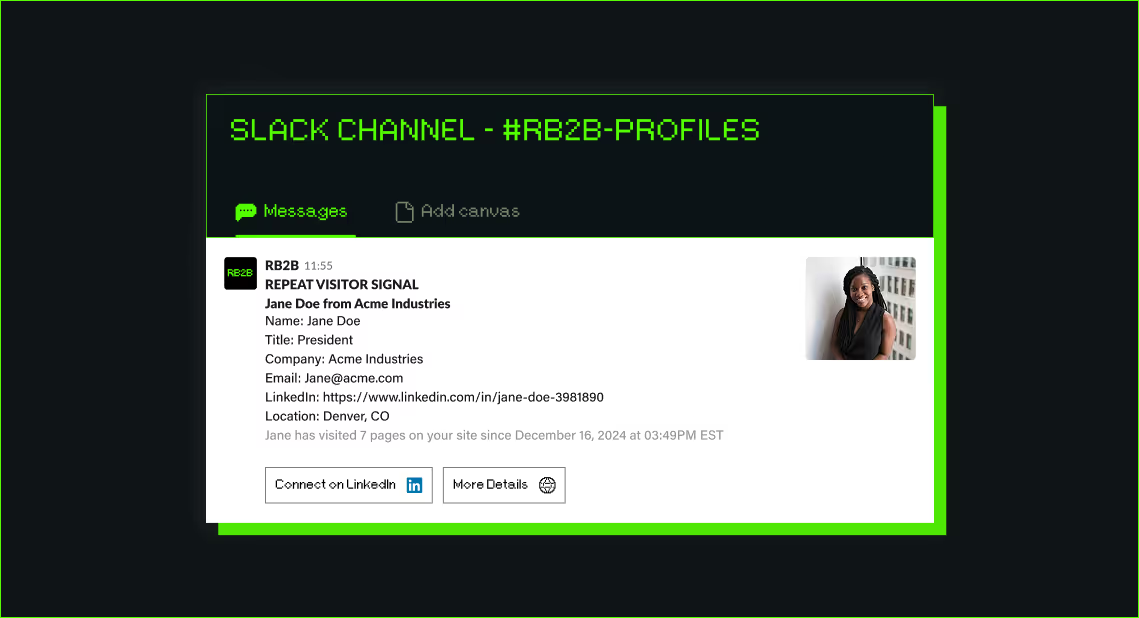
RB2B is a data intelligence platform that helps sales and revenue teams identify and engage high prospects effectively. The platform emphasizes real-time website visitor identification, person-level intent signals, and seamless integration with CRM tools and Slack channels to ensure easy, direct access to lead information.
RB2B is best suited for startups and growing teams in need of practical alternatives to large operation platforms like Cognism. Its seamless onboarding process and streamlined workflow make RB2B a suitable alternative to Cognism for organizations that don’t need excessive overhead.
Key Features
- CRM and Slack Integrations: RB2B connects directly with tools like HubSpot, Salesforce, and Slack, allowing identified visitors to be routed instantly into existing sales workflows.
- Real-Time Website Visitor Identification: RB2B identifies companies visiting your website in real time, even when visitors do not fill out a form.
- Person-Level and LinkedIn Profile Capture: Where available, RB2B surfaces individual decision-makers associated with active website visits, including verified emails and LinkedIn profiles.
- ICP-Based Filtering and Lead Routing: RB2B allows teams to filter identified visitors by firmographic criteria such as company size, industry, and location.
Pricing
- Free Package: The free version of RB2B offers 150 basic resolutions monthly, company-level ID and Slack integration.
- Starter Package ($79 per month): This package offers 300 basic resolutions monthly and pushes LinkedIn URLs to Slack.
- Pro Package ($149 per month): The pro package offers 600 basic resolutions monthly and business email addresses.
- Pro+ Package ($199 per month): This package offers everything in the pro package plus 600 premium resolutions.
Pros
- Identifies anonymous website visitors
- Intent signals are tied to real on-site behavior
- Supports precise targeting and customization
- Integrates cleanly into existing sales workflows
Cons
- Visitor identification coverage is currently strongest for U.S.-based traffic
2. MoltSets
MoltSets (built by the team behind RB2B) puts B2B contact data inside the tools you already use. Connect it to Claude or ChatGPT and ask in plain English, for example: “Find 100 SaaS CEOs in California with verified emails.” Or plug it into Clay, n8n, your CRM, or a spreadsheet.
It searches people and companies and returns verified work and personal emails, each with a risk score, plus carrier-verified mobile numbers. Every email is validated as it’s found, so you don’t need a separate email verifier.
Best for: Sales teams, founders, and GTM folks who want to build and enrich prospect lists from an AI assistant or their existing tools, without per-lookup credits.
Key Features
- People and company search: Build prospect lists by filtering people and companies, then enrich them in the same step
- Verified emails with risk scores: Work and personal emails are validated as they’re found and graded for send safety
- Carrier-verified mobile numbers: Real-time verified mobiles, billed per number
- Email validation and reverse email lookup: Clean an existing list before sending, or identify who’s behind an address
- Works where you do: Connect it to Claude or ChatGPT, or pull data into Clay, n8n, your CRM, or a spreadsheet
Pricing
- Free: $0, with 1,000 lookups to start and no card required
- Unlimited: $27/month (1,000 enrichments and 500 search records every 5 hours)
- Unlimited: $97/month (15,000 enrichments and 7,500 search records every 5 hours)
- Unlimited: $397/month (150,000 enrichments and 75,000 search records every 5 hours)
*Core data has no per-lookup credits; plans differ by how much you can pull every 5 hours. Mobile numbers are $0.15 each, and Unlimited plans are subject to a fair use policy.
Pros
- Works from Claude or ChatGPT
- No per-lookup credits on core data
- Finds and validates emails in one step
- Free plan
Cons
- No standalone dashboard, so you use it through an AI assistant or connected tool
- In public beta
- Mobile numbers cost extra
3. ZoomInfo
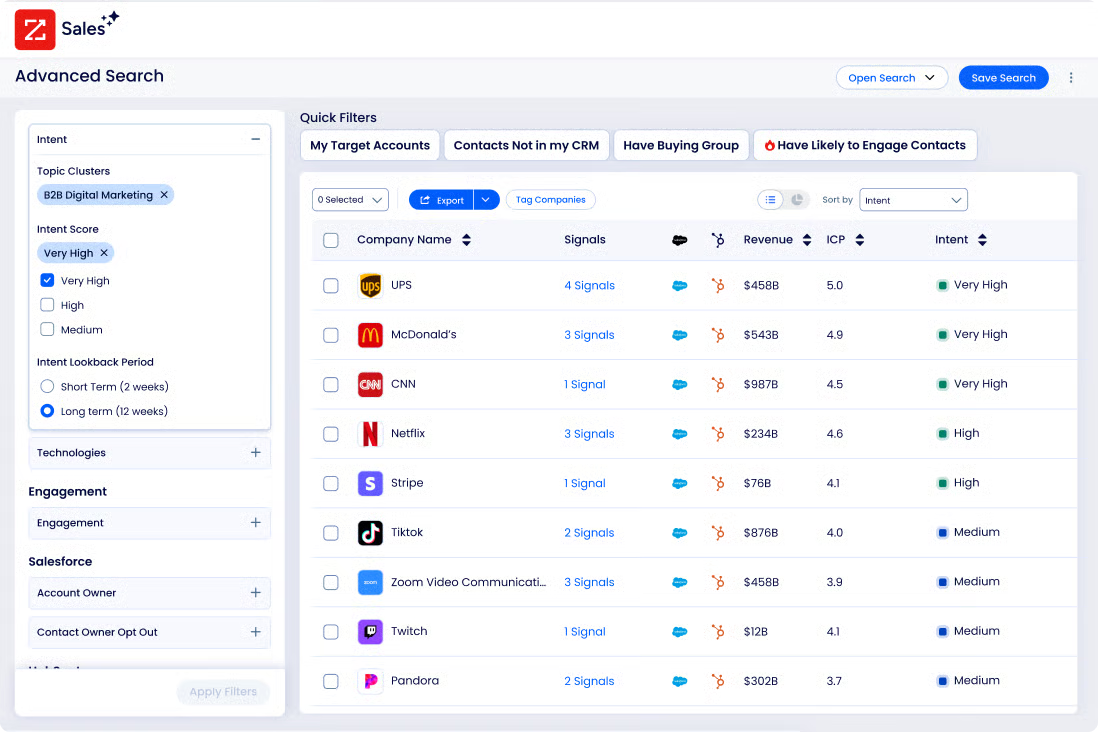
ZoomInfo is a B2B sales intelligence platform. This platform provides users with data gathered from verified sources, such as public websites and government records. ZoomInfo is mainly used by sales, marketing, business development, and account management teams. This platform is best suited for scaling businesses and enterprises; small and medium-sized companies may find it a bit pricey.
Key Features
- CRM Integration: ZoomInfo integrates with CRM tools like HubSpot, reducing manual data entry by syncing company data directly into the CRM.
- Company Database: ZoomInfo offers a collection of detailed company profiles, including size, revenue, and technology. This feature helps businesses create a personalised account-based marketing outreach strategy.
- Conversation Intelligence: ZoomInfo uses AI to transcribe, record, and analyze calls between sales representatives and leads by highlighting buyer intent, keywords, and objections.
Pricing
ZoomInfo has no publicly listed pricing.
Pros
- Easy CRM Integration
- Valuable Intent data to identify prospects
- Provides a large database
- Provides data clean-up assistance
Cons
- Involves a steep learning curve
- It is not a complete ABM platform
- Its interface can be cumbersome
- It has a data destruction clause
4. UpLead
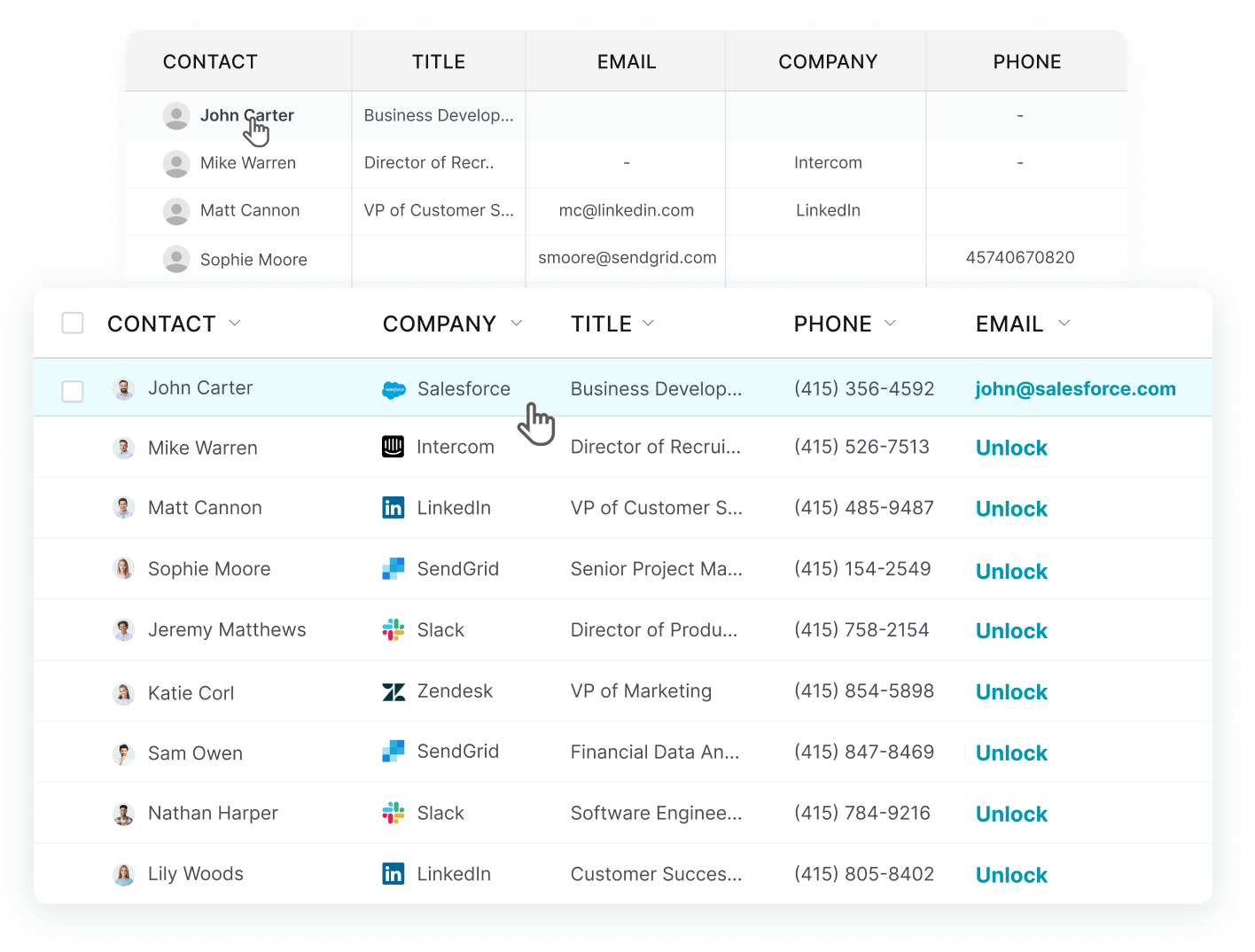
UpLead is a B2B data provider with valuable intent data, and it verifies emails and phone numbers in real time. UpLead is designed to help sales teams contact lead prospects without unnecessary delay. This platform is best suited for small to mid-sized teams that require reliable data without committing to high-priced packages,
Key Features
- API Access: Uplead’s API gives developers complete control and flexibility over tools and workflows.
- Chrome Extension: UpLead offers a Chrome extension that collects contact details directly from company websites or LinkedIn, making capturing leads while browsing the web easier and quicker.
- Prospector Tools: This platform allows users to search for verified B2B contacts using filters such as company size and location.
- Email Verification: UpLead checks every email in real time for accuracy to protect the sender's reputation and ensure emails reach the right inboxes.
Pricing
- Essential Package ($99 per month): The essential package offers 170 credits per month, verified emails and CRM integration.
- Plus Package ($199 per month): This package offers 400 credits per month, everything the essential package offers plus, technographics, data enrichment, and advanced filters.
Pros
- Real-time email verification
- Smooth CRM Integration
- Accurate and verified data
- User-friendly interface
Cons
- Occasional data gaps
- Limited data on niche markets
- Too expensive for small teams
- Limited credits in the lower plan
5. Lusha
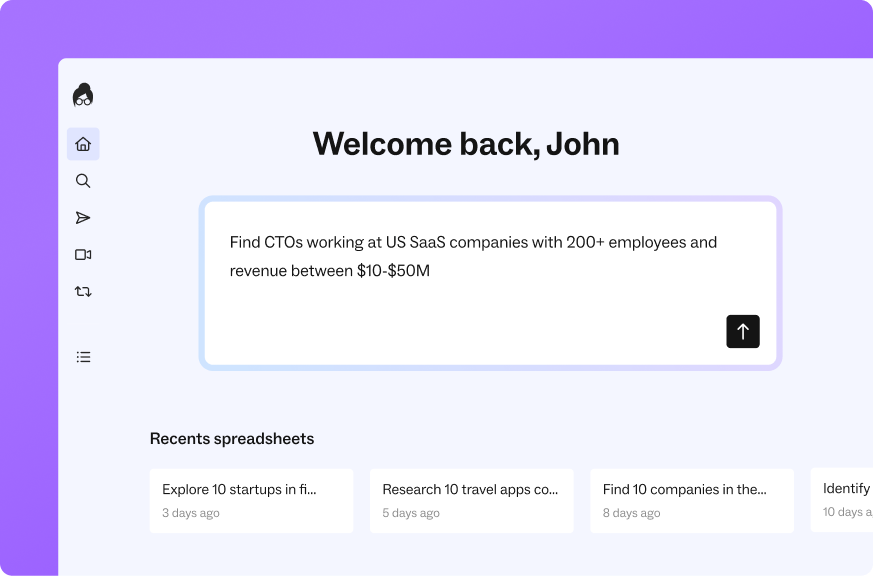
Lusha is a sales intelligence platform that helps businesses secure their next customers. It provides an accurate, compliant database of companies, powered by over a million users. Lusha is primarily used by marketers, sales, and business development teams to extract data, enable sales, and manage contact details. Lusha is best suited for both small and medium-sized enterprises and large organizations looking for access to high-quality contact data.
Key Features
- Data Accuracy and Compliance: Lusha’s data quality complies with global data privacy regulations, including the CCPA and GDPR.
- CSV Bulk Enrichment: Lusha allows users to upload a spreadsheet of leads or companies and enrich these files with verified data in bulk.
- Search Filters: Lusha provides its users with advanced search filters to refine searches and find relevant leads.
Pricing
- Free Package : The free version offers 40 credits per month, with 1 seat and no credit card required.
- Starter Package ($49.90 per month): The pro package offers 400 credits per month, everything in the free version plus AI assistance and bulk enrichment.
- Pro Package ($69.90 per month): This package offers 600 credits per month, 2 seats, everything in the starter package plus, APIs and automated workflows.
- Premium Package ($399.90 per month): This package provides 3400 credits per month, 5 seats, everything in the pro package, plus credit allocation and advance APIs.
Pros
- Seamless Integration Capabilities
- Intuitive and user-friendly interface
- Effective lead generation
Cons
- High pricing concerns
- Frequent email inaccuracies
- Inconsistent data accuracy
6. Kaspr
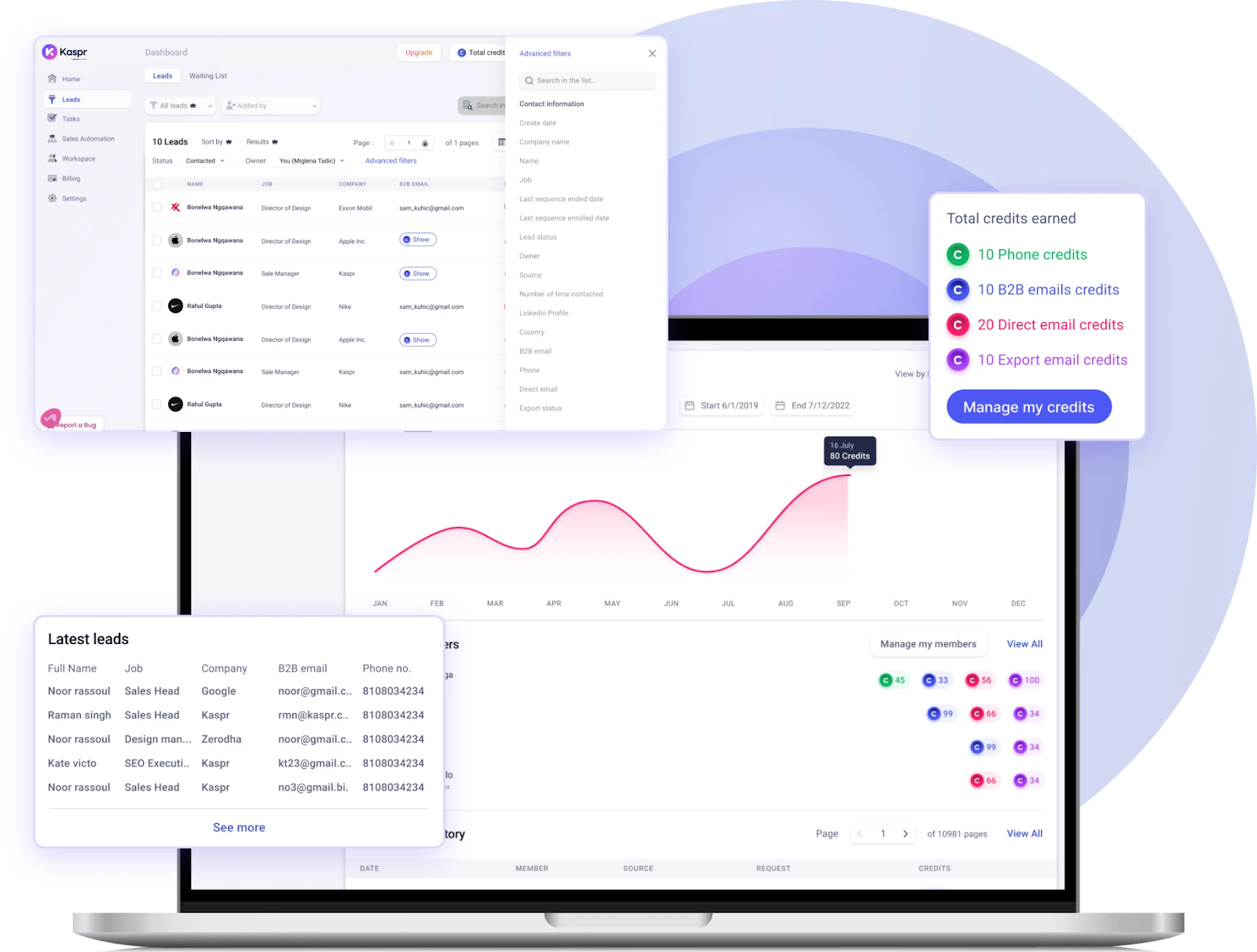
Kaspr is a B2B lead-generation platform that helps recruiters and sales professionals find verified contact details from reliable sources, such as LinkedIn. Kaspr is used by marketers, strategists, and operations managers to nurture, manage, and generate leads. Kaspr is best suited for individuals and small to medium businesses that need accurate contact data, such as email addresses and phone numbers, via LinkedIn.
Key Features
- LinkedIn Chrome Extension: Kapsr’s defining feature is its Chrome extension that reveals accurate contact data directly on LinkedIn profiles.
- Seamless CRM Integrations: Kaspr connects easily with CRMs like HubSpot and Salesforce to streamline workflows
- Lead Management Dashboard: Kaspr provides a web dashboard for users to monitor and manage all leads.
Pricing
- Free Package: The free version of Kaspr allows 15 B2B email credits, 5 phone credits and 5 direct email credits.
- Starter Package ($65 per month): The starter package provides unlimited B2B email credits, 100 phone credits and 6 direct email credits.
- Business Package ($99 per month): This package allows unlimited B2B email credits, 200 phone credits and 200 direct email credits.
- Enterprise Package: This package is best for bigger teams. Pricing for this package requires contacting the Kaspr team for more information.
Pros
- Unlimited B2B emails on paid plans
- GDPR and CCPA compliant
- Strong European phone number coverage
Cons
- Limited phone credits on lower tiers
- Not ideal for US-focused prospecting
- No outreach capabilities
7. Apollo
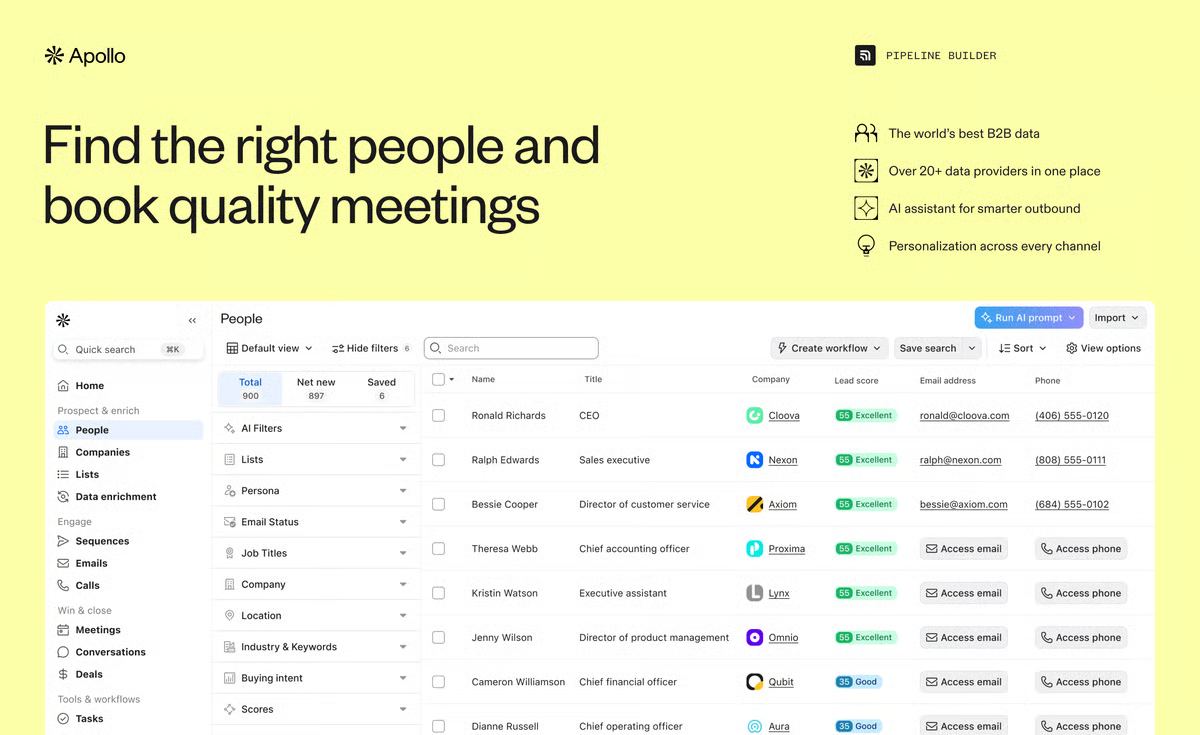
Apollo is a sales and engagement platform that helps B2B sales teams find leads and close deals faster. The Apollo platform targets sales managers, executives, and sales development representatives across companies: from individual founders to enterprise sales organizations. It is best suited for startups and mid-market companies looking for an affordable alternative to enterprise solutions.
Key Features
- B2B contact database and advanced filtering: Apollo has a database with over 200 million contacts and 30 million companies. You can search for valuable leads using filters such as company size, location, industry, and buying intent signals.
- Multichannel Outreach Sequences: Apollo lets users build automated outreach sequences combining phone calls, follow-ups, and emails.
- Built-in Dialer and conversation Intelligence: Apollo provides a cloud-based dialer with US and international calling available in higher plans. You can log calls and synchronize daily activity to your CRM.
Pricing
- Free Package: The free version provides 900 credits per user, per year, and is granted every month.
- Basic Package ($49 per month): This package offers 30,000 credits per user, per year, which is granted upfront.
- Professional Package ($79 per month): This package provides users with 48,000 credits per user, per year, and it is granted up front.
- Organization Package ($119 per month): This package provides 72,000 credits per user, per year, and it is granted upfront.
Pros
- Email deliverability features
- Responsive customer support
- An all-in-one platform that saves money
Cons
- Phone number quality is poor
- Data accuracy issues
- Steep learning curve for advanced features
8. SalesIntel
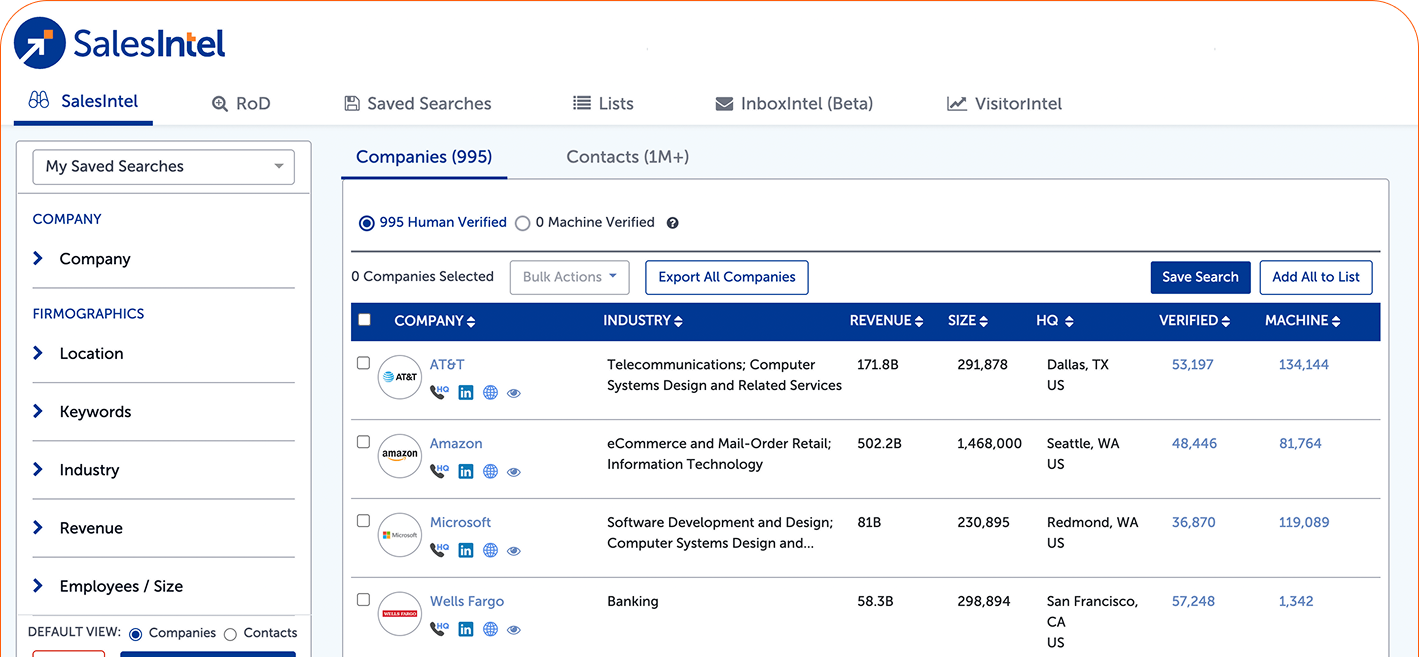
SalesIntel is a platform that provides reliable B2B contact and company data to help sales and marketing teams identify and connect with prospective clients. This platform enables users to select their target audience and enhance lead generation by providing accurate, up-to-date contact information.
Key Features
- Unlimited Data Access: This platform offers unlimited data access, which allows for extensive market penetration.
- Integration Capabilities: SalesIntel seamlessly integrates CRM and marketing automation platforms.
- Predictive Signals: SalesIntel reveals accounts that are leaning towards conditions that will result in buying streaks
- Extensive Contact and Company Databases: This platform offers access to profiles, including technographics and firmographics.
Pricing
SalesIntel has no publicly listed pricing because they offer custom pricing.
Pros
- Extensive Integrations
- Unlimited Access
- Data Accuracy and Depth
Cons
- Complexity in Features
- Limited total number of prospect clients listed
- Rigid research and difficulty in finding smaller companies
9. LeadIQ
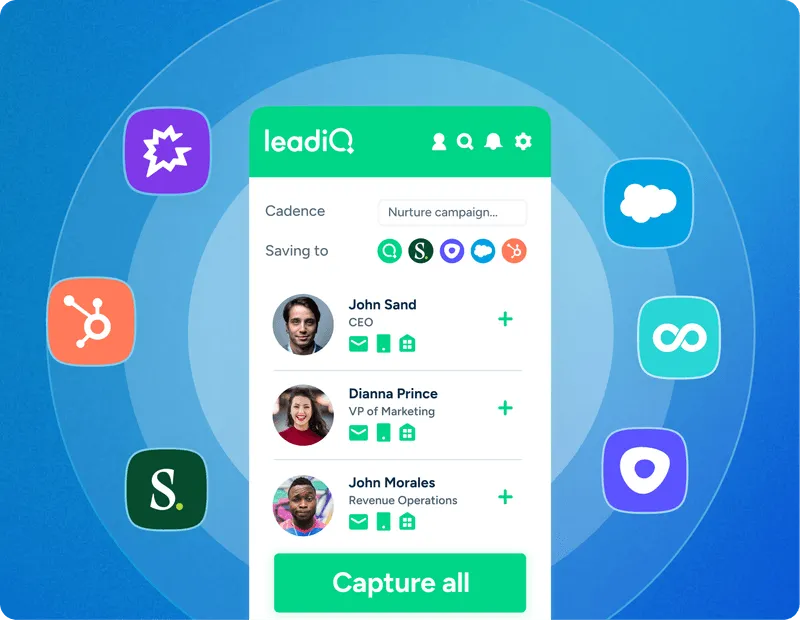
LeadIQ is a B2B sales intelligence and prospecting platform that provides data for capturing emails and phone numbers through LinkedIn integration. LeadIQ offers its users an AI writing assistant and AI-powered account prospecting, making it a valuable alternative to Cognism.
Key Features
- CRM Enrichment and Flexible API: LeadIQ enables users to enrich their CRM data and their proprietary workflows through a simple, flexible API.
- AI Account Prospecting: This platform automatically identifies potential stakeholders and valuable accounts. This feature works best for teams that want to focus on high-value prospects.
- Waterfall Email Enrichment: LeadIQ uses a waterfall enrichment system to query different data providers for the purpose of verifying contact email addresses.
Pricing
- Free Package: The free version is accessible to only one user with 50 credits.
- Pro Package ($15 per month): This package allows up to 5 users. It is best suited for growing sales teams that prioritize building pipelines with a smooth outbound prospecting process.
- Enterprise Package: This package is for established sales teams who are looking to increase outbound activities. Such teams would have to contact experts at LeadIQ for more information about pricing.
Pros
- Strong LinkedIn Integration
- Champion tracking is very useful to account-based sales teams
- Fast Customer support
- Affordable pricing for small to mid-sized teams
Cons
- Buggy Salesforce Integration
- Limited filtering options
- Company-level data is often missing
- AI-generated email copies require heavy editing
10. SyncGTM
SyncGTM is a GTM orchestration platform that combines lead sourcing, contact enrichment, and buying-signal tracking in one credit-based workspace. It returns 70+ person and company data points and uses waterfall enrichment across multiple data providers to find work emails, personal emails, and mobile numbers. From there, you can score leads against your ICP and trigger AI-personalized outreach, either in the app or through its MCP server.
Best for: GTM engineers, RevOps teams, and agencies that want enrichment, signals, and outreach automation in a single usage-based workflow.
Key Features
- Waterfall enrichment: Queries multiple providers in sequence to maximize verified email (work and personal) and mobile number coverage
- Real-time signals: Tracks job changes, promotions, headcount growth, job openings, funding, and tech stack changes
- Lead finder and ICP scoring: Builds lead lists and scores them against your ideal customer profile
- Integrations: Two-way HubSpot and Salesforce sync, sequencer integrations such as Instantly and Smartlead, and support for your own API keys
- AI agent and MCP access: Run research and enrichment through the Sync AI Agent or from MCP-compatible AI tools
Pricing
- Solo: $49/month (1,000 credits)
- Growth: $99/month (3,000 credits)
- Pro: $249/month (10,000 credits)
- Business: $649/month (40,000 credits)
- Enterprise: Custom pricing
*Monthly billing; annual billing saves 10%. Unused credits roll over, and a verified email costs 1 credit while a mobile number costs 10.
Pros
- Transparent, usage-based pricing with rollover credits
- Waterfall enrichment for broader email and phone coverage
- Real-time buying signals alongside contact data
- MCP and AI agent access
Cons
- Mobile numbers use 10x the credits of an email
- Workflow-style setup is more than some teams need for simple contact lookups
- White-glove support only on Business and Enterprise plans
11. Clearbit
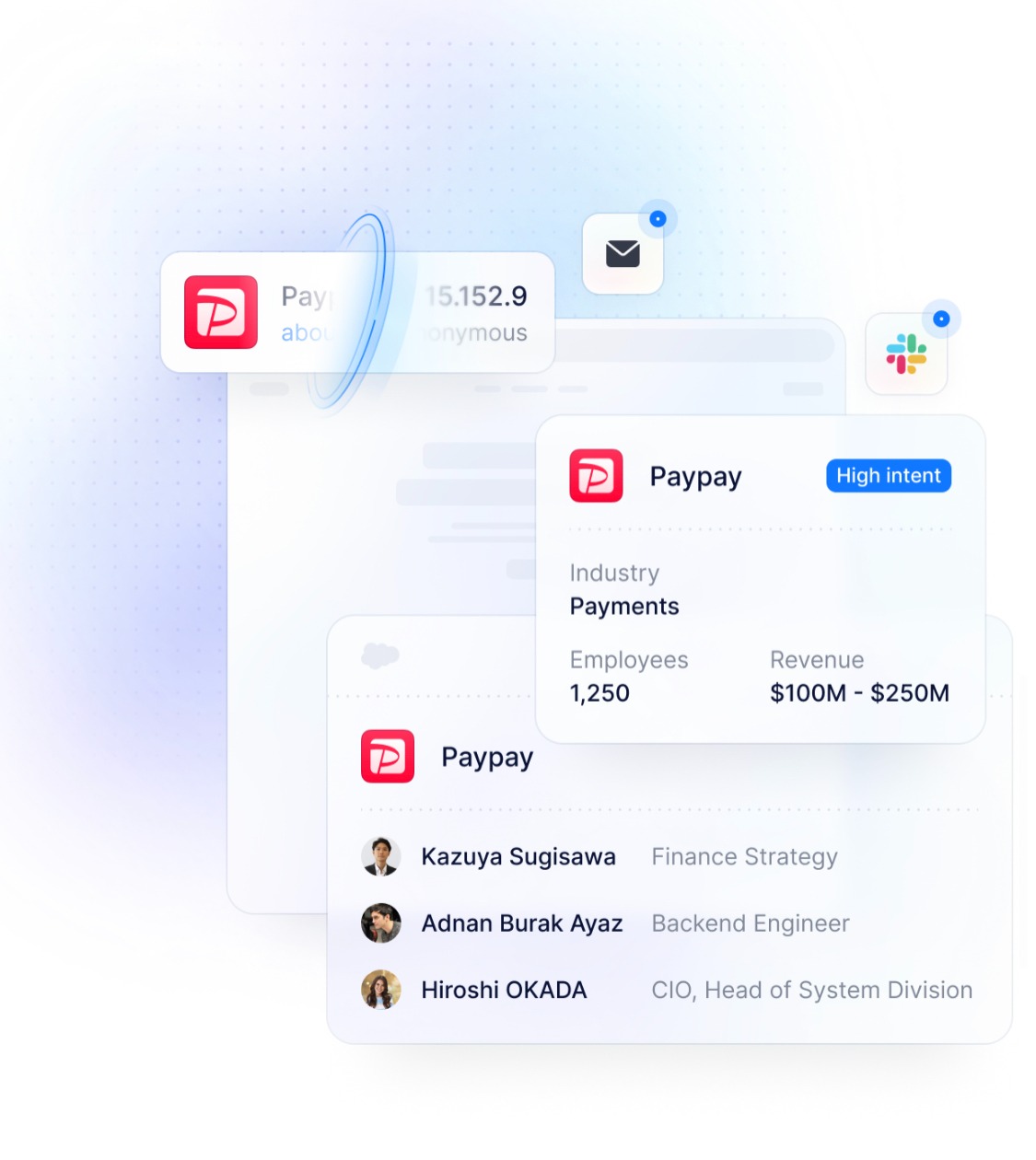
Clearbit is a sales intelligence platform that provides enriched data to enhance customer profiles. It is best suited for teams that already have existing CRM and sales engagement tools but require better access to contact and company data. However, smaller businesses might find Clearbit to be quite pricey.
Key Feature
- Website Visitor Identification: This platform reveals the identity of the companies visiting your website, whether or not they fill out a form.
- Contact and Company Lookup: Clearbit provides in-depth profiles of prospective contacts and companies, including insights into job roles, locations, and firmographics.
- Lead Scoring: Clearbit ranks leads based on potential value, helping teams prioritize the right leads.
Pricing
Clearbit has no publicly listed pricing.
Pros
- Straightforward onboarding process
- Seamless CRM integrations
- Detailed data enrichment for lead generation
Cons
- High cost for smaller businesses
- Lacks necessary customization options
- No CRM or Pipeline tracking
12. DealFront
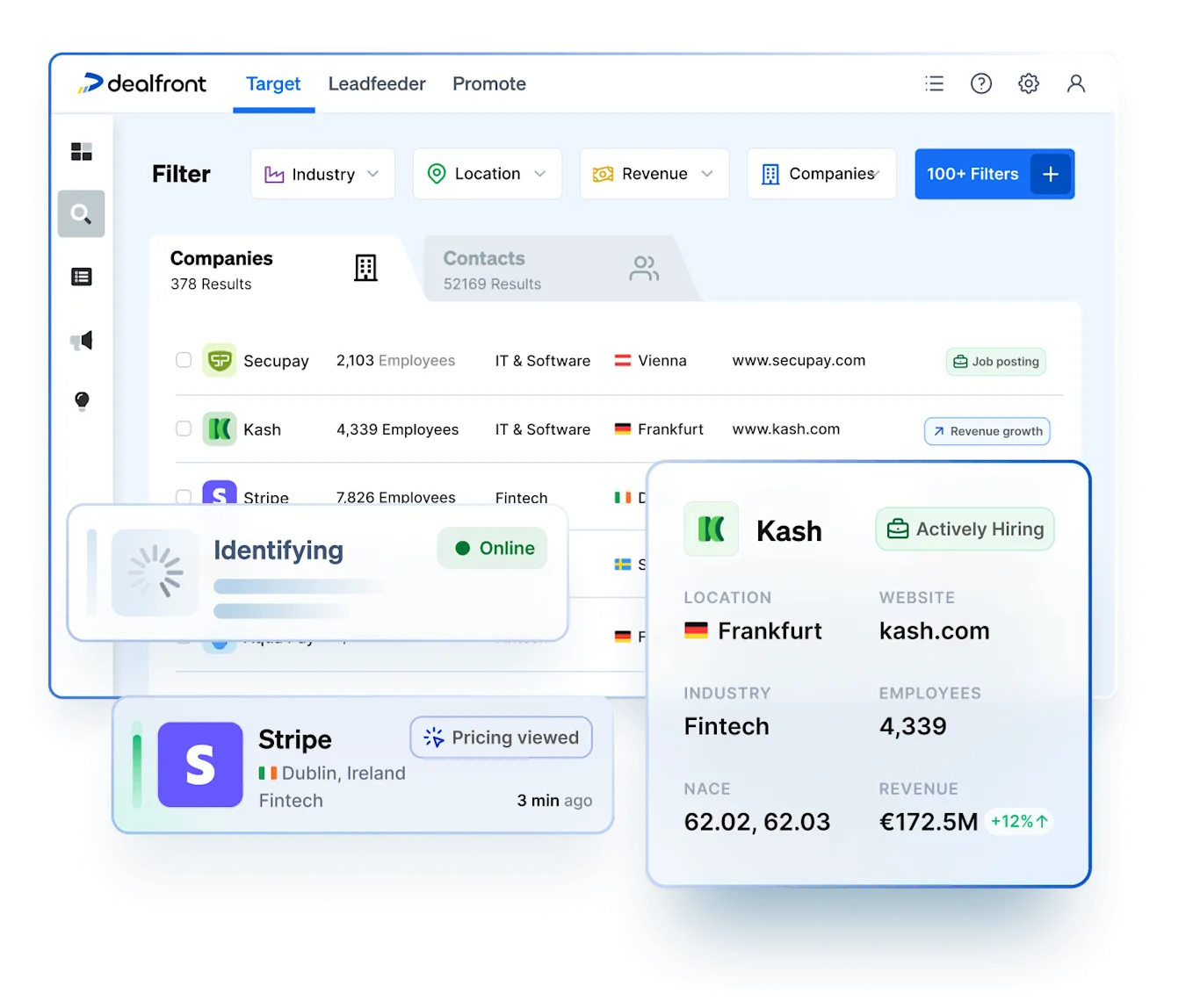
DealFront is a marketing platform that combines sales intelligence with the necessary tools to help sales teams find quality leads. This platform provides insights into intent signals, allowing businesses to engage with the right prospects. Its ability to enrich CRM data with website visit details makes it a good Cognism alternative. New users might experience a steep learning curve while trying to navigate the software.
Key Features
- Creates New Deals: This platform increases productivity by reducing the time spent manually generating leads, thereby improving the efficiency and effectiveness of sales efforts.
- Real-Time Insights: DealFront delivers buying signals and intent data to your CRM with minimal research required.
- Seamless Prospecting: Access to detailed company and contact data within your CRM, reducing manual lookups.
Pricing
To get DealFront pricing information, you have to request a custom quote.
Pros
- Comprehensive EU-compliant data
- Deep insights for better lead targeting
- Accurate and real-time website visit data
Cons
- Lack of pricing transparency
- Steep learning curve for new users
- Insufficient sales making features
13. RocketReach
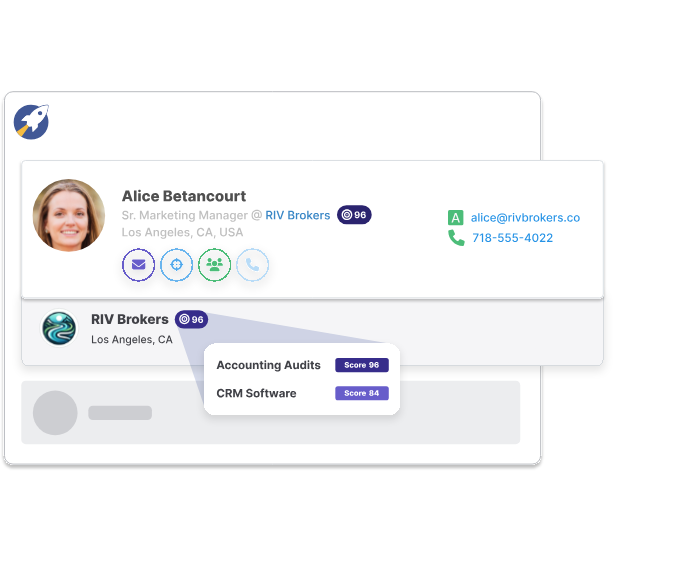
RocketReach is a contact-finding platform used to verify social media profiles, phone numbers, email addresses, and prospective customers for businesses launching sales campaigns. This platform is used by companies that are looking to hire talent as well as professionals who wish to expand their connections. Unfortunately, its advanced features can only be accessed in the paid versions.
Key Features
- AI-Powered Recommendation: This platform offers teams an autopilot feature that generates dynamic lists, an email sequence builder, and AI-powered email authoring.
- RocketReach Message: RocketReach has an integrated messaging tool that contacts targets and prospects directly through the platform
- Global Contact Database: This platform provides access to a contact database of over 500 million professionals and over 60 million companies worldwide.
- Email Deliverability Monitoring: RocketReach uses a validation process to ensure the email addresses on the list are verified and accurate, preventing unsuccessful email campaigns.
Pricing
- Essentials Package ($49 per month): This package includes 70 lookups per month, 500 emails per day, and 70 exports per month.
- Pro Package ($99 per month): This package is best for professionals using multi-channel outreach with email and phone. It allows for personal and professional emails, 200 lookups per month, technographics, CRM integration, and Autopilot for 10 active jobs.
- Ultimate Package ($209 or month): This package is best suited for teams with large prospecting and automation needs. It provides 1000 lookups per day, autopilot for 25 active jobs, intent data, healthcare data, and everything offered in the Pro package.
Pros
- Responsive customer support
- Effective Lead Generation
- Easy-to-use interface
- Massive database of verified contacts
Cons
- Occasional incorrect and outdated Information
- Advanced features are only available in premium packages
- Expensive compared to other options.
14. DiscoverOrg
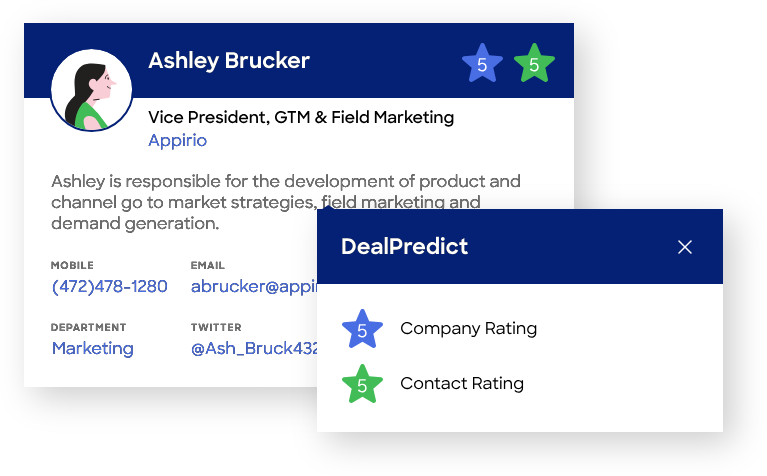
DiscoverOrg is a sales intelligence platform that provides accurate company and contact data, along with deep sales insights. This platform focuses on aligning marketing and sales through detailed contact profiling. It is a good Cognism alternative for medium-sized and enterprise businesses. Users however complain of occasional software glitches that disrupt workflow.
Key Features
- Pipeline Management: DiscoverOrg tracks the progress of long-term sales goals and opportunities, as well as project progress.
- 360-degree view of market: Defines an Ideal Customer profile by leveraging insights from the existing customer base.
- Accurate buyer intent signal: DiscoverOrg identifies active prospects using buying signals.
- Precision Prospecting: DiscoverOrg offers teams an upper hand by beating other recruiters with automatic alerts about significant personnel changes
Pricing
DiscoverOrg offers multiple plans at different price points that are not publicly listed.
Pros
- Accurate contact data
- Enhanced marketing sales alignment
- Reliable customer support
Cons
- Occasional software glitches
- Outdated Contacts
- No transparent pricing
15. LeadGenius
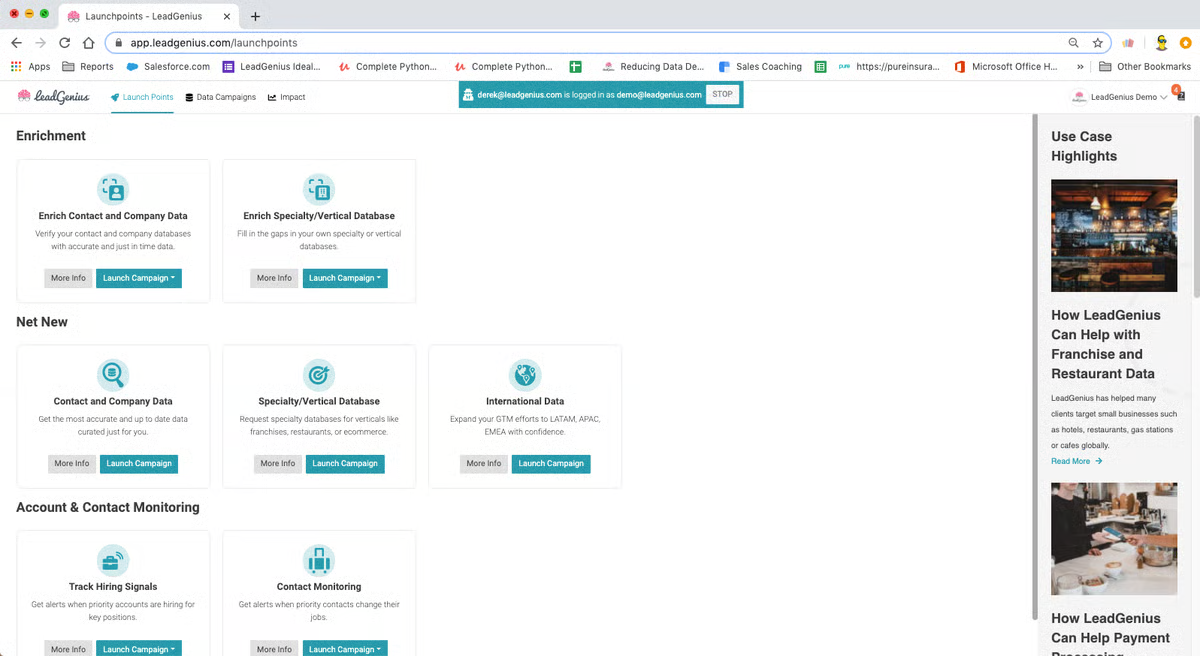
LeadGenius is a B2B sales intelligence platform that provides real-time, compliant B2B company and contact data powered by artificial intelligence and human expertise. This platform is best suited for mid-sized to enterprise businesses. However, businesses looking for a mobile software might find LeadGenius difficult to use.
Key Features
- AI and Human Expertise sourcing: LeadGenius combines machine learning with human researchers to gather and verify accurate data.
- CRM Integration: This platform seamlessly integrates with popular CRM tools like HubSpot and Salesforce.
- Analytics Dashboard: Allows monitoring of sales campaign performance and lead metrics.
- Chrome Browser Extension: LeadGenius has a Chrome extension that syncs contact information directly from LinkedIn pages.
Pricing
LeadGenius has no publicly listed pricing.
Pros
- Good customer support and training resources
- AI and human-verified database
- Customizable lead generation tailored for specific needs
Cons
- Occasional delays in lead delivery
- Varying and opaque custom pricing
- Strictly supports only web-based usage
Choosing the Right Cognism Alternative for Your Team
Selecting the right Cognism alternative depends on your team’s goals, structure, and data needs. While Cognism remains a strong option for B2B intelligence, many teams require greater flexibility, transparency, and ease of use to support modern sales workflows.
This is where alternatives like RB2B stand out. By focusing on accurate data, intuitive functionality, and practical sales execution, RB2B enables teams to adopt faster and scale efficiently. Explore RB2B to determine whether it aligns with your growth strategy and revenue objectives.
FAQs
1. Why Do Companies Look for Alternatives to Cognism?
Many reasons are cited for the search for cognism alternatives, such as the need for transparent pricing, limited data coverage in specific locations, limited data for smaller companies, and a desire for simpler, customizable platforms.
2. Are Cognism Alternatives Also Compliant With Data Privacy Regulations?
Yes, many of the listed Cognism alternatives recognize the importance of trusted, valuable data. They are compliant with data privacy regulations like GDPR and CCPA.
3. Do Cognism Alternatives Support Both Sales and Marketing Teams?
Yes, the majority of the listed Cognism alternatives are designed to support both the sales and marketing teams of any company by providing buyer intent signals accessible to both teams, as well as supporting sales campaigns that require both teams to work together.
4. How Do I Choose the Right Cognism Alternative for My Team?
You start by fully understanding your team’s primary needs, like sales intelligence, outbound prospecting, lead generation and qualification, and deal closing. Then you carefully assess the features of the Cognism alternatives and decide which fits naturally into your existing workflow.
5. Are Cognism Alternatives Easier to Use Than Cognism?
Ease of use should be a given for any sales intelligence platform. Several Cognism alternatives prioritize an easy-to-use interface to reduce setup time and improve workflow.
6. Are Cognism Alternatives a Long-Term Solution?
Yes, for many companies, most cognism alternatives offer a long-term fix for their sales and management problems because these platforms support evolving teams.