
Quick Summary
Snov.io is useful for finding emails and running outbound campaigns, but it still relies heavily on cold outreach and lacks real scalability potential. The list of 16 Snov.io alternatives features RB2B as the leading tool, offering real intent data and person-level ID, followed by MoltSets (built by the team behind RB2B), Apollo.io, and ZoomInfo.
Is Snov.io Enough for Modern B2B Sales?
Snov.io does one thing well: finding emails and sending them at scale. But knowing who to email and knowing who's ready to buy are two different problems. When companies lack ways to identify interest right from their websites, they lose potential clients, conversions, and revenue.
Beyond cold lists, B2B teams need platforms that offer clearer intent signals and better timing. If your team is hitting volume targets but not conversion targets, you're likely missing intent signals that no email finder can provide. In this RB2B article, we compare 16 alternatives that go further.
But first…
Why Listen to Us?
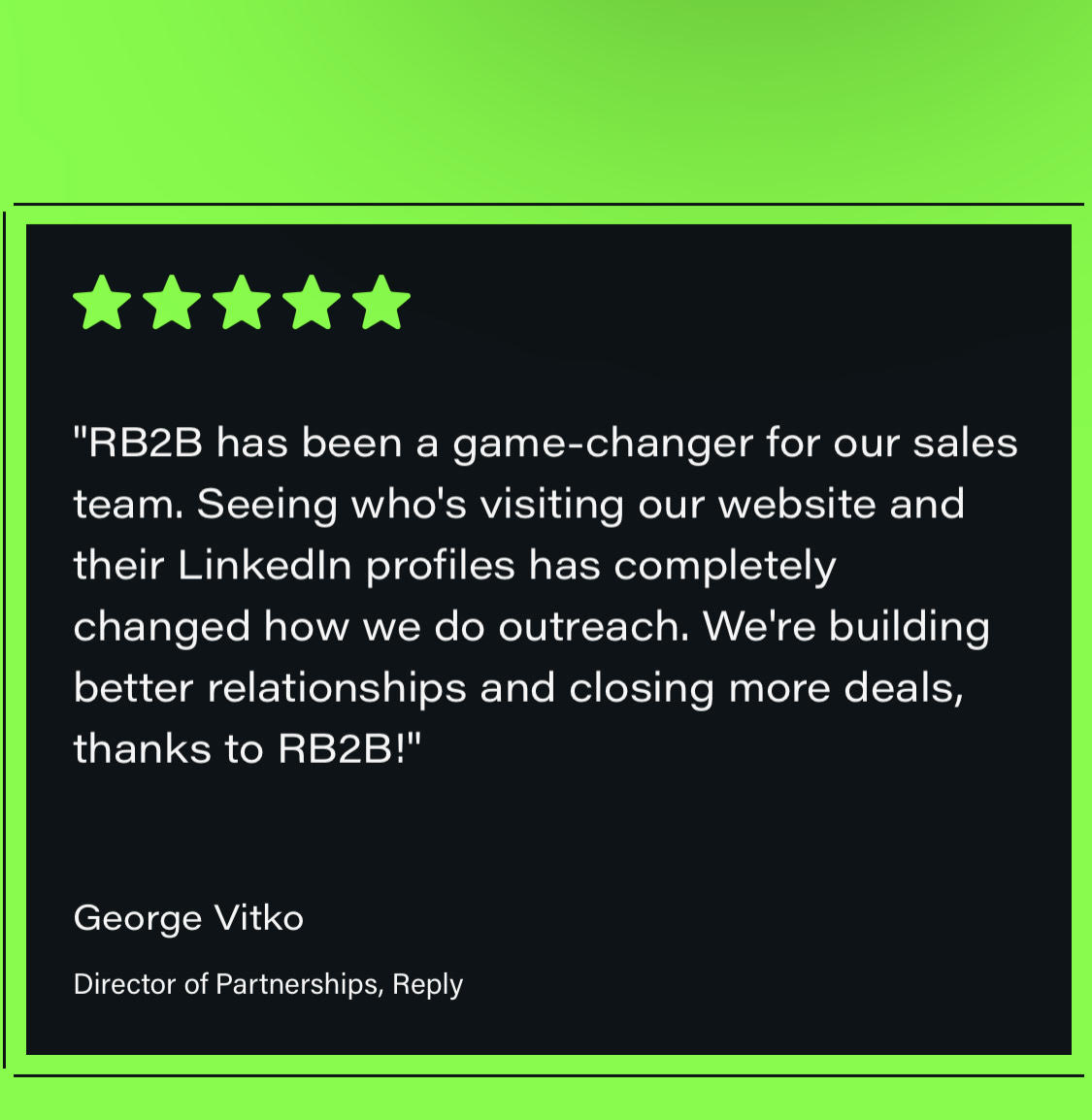
RB2B works with over 100,000 B2B teams on website visitor identification. Our founder, Adam Robinson, has built one of the most followed practitioner brands in B2B sales, which means we hear constantly what teams are trying, what's breaking, and what's actually working. Our research, combined with product testing, reviews, and feedback, gives us a clear view of how teams build and manage pipelines.
What is Snov.io?

Snov.io is an engagement and all-in-one outbound sales platform for finding contacts and running cold email campaigns. Primarily, it provides email verification and lead sourcing services, helping B2B teams automate outreach from a single platform.
Snov.io proves particularly valuable for early-stage companies focused on outbound prospecting rather than buyer intent.
Key Features
- Email Finder: Finds contact emails based on names, companies, or domains using database search and pattern matching
- Email Verifier: Validates emails before sending, reducing bounce rates and inaccuracy
- Multichannel Campaigns: Allows sales teams to send automated cold messages across email and LinkedIn, along with follow-ups and sentiment tracking
- Sales CRM: Stores, organizes, and tracks leads and deals so you can manage outreach in one place
Pricing
- Trial: This is Snov.io’s free version. It renews every 30 days with 50 credits, 100 recipients, and 1 warm-up slot, but offers no growth tools or integrations
- Starter ($39/month): Offers 1,000 credits, 5,000 recipients, 3 mailbox warm-ups, and unlimited monthly emails
- Pro ($99–$738/month): Comes in four sizes—Pro S, Pro M, Pro L, and Pro Ultra—scaling from 5,000–100,000 credits, 25,000–200,000 recipients, and unlimited warm-ups
- Custom Ultra (custom pricing): Offers 200,000+ credits, 400,000+ recipients, and unlimited warm-ups and emails
Pros
- Strong prospect generation capacity
- All-in-one outbound toolkit
- Outstanding customer support
Cons
- Limited feature list
- Verified emails may still bounce, affecting campaign reliability
- Some users report a cluttered interface and lags when running larger campaigns
Why Should You Look for a Snov.io Alternative?
Snov.io is a viable solution for email finding and outbound volume. However, in today’s market, a mailing list alone can be limiting, as most businesses need targeted marketing and business insights. These constraints push teams to seek out Snov.io alternatives:
1. Heavy Reliance on Cold Outbound
Snov.io builds your entire sales workflow around finding contacts and emailing them, regardless of initial interest, but intent largely determines whether they’ll reply. In lead generation, this leads to low response rates and resource drain, especially when warm inbound opportunities get no notice.
2. Varying Accuracy at Scale
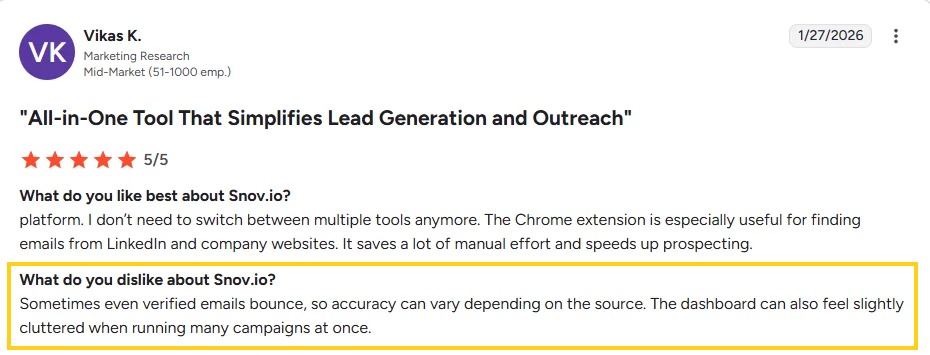
Email finding works in smaller tests, but as volume increases, verification may be less accurate, meaning outdated data and bounce rates become more common. This directly affects deliverability and campaign performance, further draining the company’s resources.
Here’s what a G2 reviewer had to say:
3. Weaker Insights
Precise visitor information helps businesses create more relevant marketing campaigns that deliver results. With Snov.io, you get basic contact and company data, but little behavioral context or intent signals. This makes it harder for sales teams to tailor outreach to the buyer’s specific journey.
4. No Person-Level ID
Snov.io provides contacts, but doesn’t show you interested prospects who are visiting or engaging with your site presently. These high-intent visitors stay anonymous and untracked, preventing you from prioritizing and converting them at the right moment.
16 Best Snov.io Alternatives for B2B Sales Teams
Although Snov.io is effective for outbound prospecting, many sales teams now look beyond cold messaging to stay competitive, with a growing focus on better data and clearer buyer signals.
These tools are ranked based on their ability to solve the core gaps Snov.io leaves open: intent visibility, outreach timing, and lead quality. Tools that go beyond cold outbound and offer real-time buyer signals are ranked higher.
1. RB2B
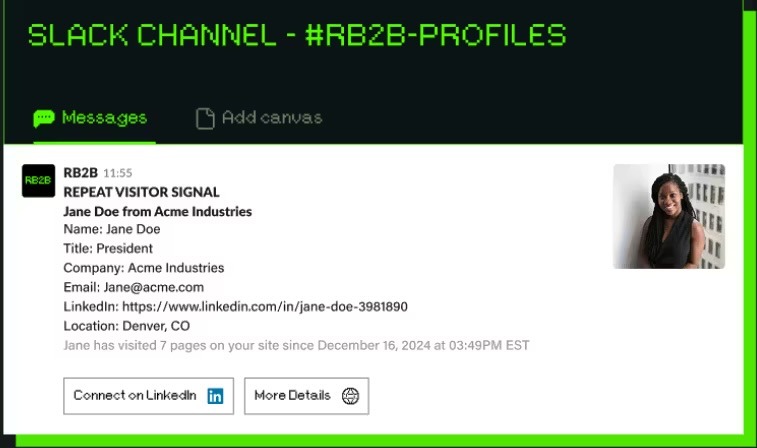
RB2B is a website visitor identification platform built for B2B sales teams that want to turn inbound traffic into pipelines. Instead of searching out and messaging new contacts alone, it identifies who is already on your site and sends you real-time alerts.
With RB2B, the focus is more than volume only, capturing timing and intent to allow you to carry out targeted outreaches. Its streamlined approach, high accuracy, easy-to-use interface, and affordable cost make it a leading option for teams that need fast, straightforward, and precise intent signals for stronger returns.
Key Features
- Person-Level Identification: Reveals the actual individuals visiting your site, including job titles, LinkedIn profiles, and contact details when available
- Real-Time Alerts: Sends instant notifications via tools like Slack so sales teams can act while prospects are still engaged
- Hot Pages Tracking: Highlights which pages high-intent visitors are viewing, helping teams prioritize outreach based on behavior
- CRM & Workflow Integrations: Syncs with platforms like HubSpot and Salesforce to automate lead scoring, routing, and follow-up
- Ideal Customer Tagging (Hot Leads): Flags visitors who match your ICP, making it easier to focus on high-value opportunities
- Freemium Access Model: Offers a free entry point so teams can identify website visitors at the company level without upfront cost and expand usage as they see results
Pricing
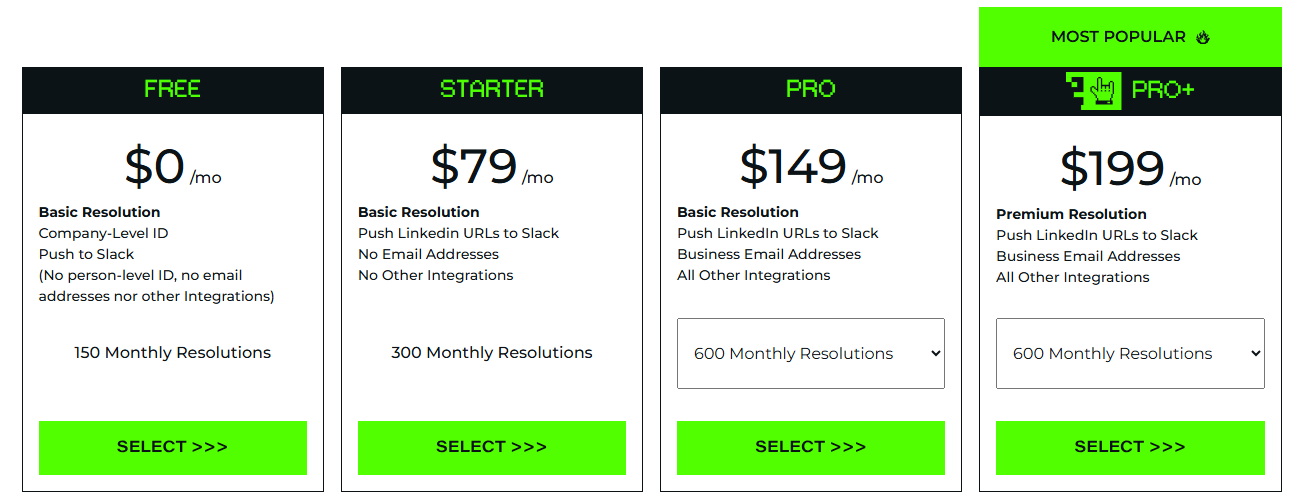
- Free ($0/month): Offers 150 basic resolutions monthly, company-level ID, and Slack integration only
- Starter ($79/month): Offers 300 basic resolutions monthly and pushes LinkedIn URLs to Slack. No email addresses or other integrations
- Pro (starting at $149/month): Offers 600-2500 basic resolutions monthly, business email addresses, Slack, and all other integrations
- Pro+ (starting at $199/ month): Offers 600-2,500,000 premium resolutions, business email addresses, and pushes LinkedIn URLs to Slack and other integrations
Pros
- Person-level identification with LinkedIn profiles and verified business emails
- Real-time Slack alerts with detailed visitor profiles
- Built-in lead prioritization using Hot Leads and Hot Pages
- Quick, no-code pixel setup that takes minutes to install
- Free plan to test value before upgrading
- US-focused data coverage aligned with GDPR compliance requirements
Cons
- Basic person-level identification is beginner-friendly, but advanced tools may require a learning curve
2. MoltSets
MoltSets (built by the team behind RB2B) puts B2B contact data inside the tools you already use. Connect it to Claude or ChatGPT and ask in plain English, for example: “Find 100 SaaS CEOs in California with verified emails.” Or plug it into Clay, n8n, your CRM, or a spreadsheet.
It searches people and companies and returns verified work and personal emails, each with a risk score, plus carrier-verified mobile numbers. Every email is validated as it’s found, so you don’t need a separate email verifier. For how it stacks up against other prospecting databases, see MoltSets’ Apollo comparison.
Best for: Sales teams, founders, and GTM folks who want to build and enrich prospect lists from an AI assistant or their existing tools, without per-lookup credits.
Key Features
- People and company search: Build prospect lists by filtering people and companies, then enrich them in the same step
- Verified emails with risk scores: Work and personal emails are validated as they’re found and graded for send safety
- Carrier-verified mobile numbers: Real-time verified mobiles, billed per number
- Email validation and reverse email lookup: Clean an existing list before sending, or identify who’s behind an address
- Works where you do: Connect it to Claude or ChatGPT, or pull data into Clay, n8n, your CRM, or a spreadsheet
Pricing
- Free: $0, with 1,000 lookups to start and no card required
- Unlimited: $27/month (1,000 enrichments and 500 search records every 5 hours)
- Unlimited: $97/month (15,000 enrichments and 7,500 search records every 5 hours)
- Unlimited: $397/month (150,000 enrichments and 75,000 search records every 5 hours)
*Core data has no per-lookup credits; plans differ by how much you can pull every 5 hours. Mobile numbers are $0.15 each, and Unlimited plans are subject to a fair use policy.
Pros
- Works from Claude or ChatGPT
- No per-lookup credits on core data
- Finds and validates emails in one step
- Free plan
Cons
- No standalone dashboard, so you use it through an AI assistant or connected tool
- In public beta
- Mobile numbers cost extra
3. Apollo.io

Apollo is a sales intelligence and engagement platform that combines a large B2B contact database with AI-assisted outreach automation. It helps sales teams find prospects, enrich data, and run cold email sequences, all from one system.
This platform is a suitable choice for outbound-driven mid-market teams looking to scale prospecting and outreach in a single workflow. However, unlike RB2B, it doesn’t capture high-intent website visitors, focusing instead on cold leads only.
Key Features
- Unified Contact Database: Lets you search for decision-makers across over 230 million contacts and 30 million companies, so you can quickly build targeted lists without switching tools
- Sales Sequencing and Automation: Allows you to create automated email and call sequences, with AI-powered call summaries, follow-ups, and task creation, helping you stay consistently in front of prospects without manual effort
- Advanced Search and Filtering: Helps you narrow down leads by role, industry, company size, and other firmographic data, keeping you focused on your ideal customer profile
Pricing
- Free ($0/month): Offers 75 credits per user monthly, with access to basic prospecting and outreach features
- Basic ($59/month): Offers 2,500 credits per user monthly, granted upfront, along with advanced prospecting and integration
- Professional ($99/month): Offers 4,000 credits per user monthly, granted upfront with multi-touch outreach
- Organization ($149/month): Offers 6,000 credits per user per year, granted upfront
Pros
- Large contact database with strong search and filtering capabilities
- All-in-one platform for prospecting, outreach, and automation
- AI research and lead generation
Cons
- Steep learning curve due to the number of features
- Some users report inconsistent data and email accuracy
- Limited customization and advanced workflows
4. ZoomInfo
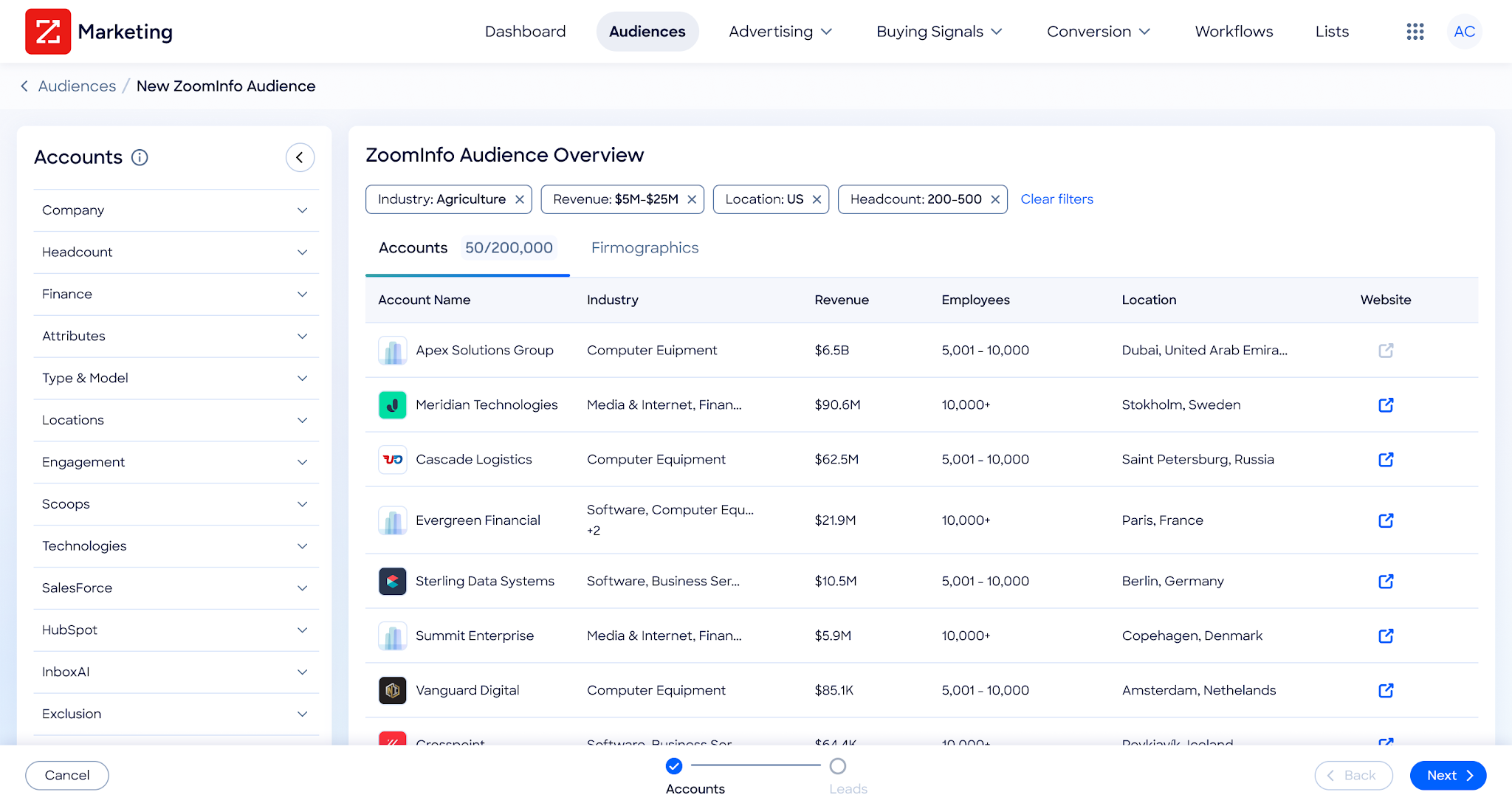
ZoomInfo is a B2B data and sales intelligence platform that helps teams find and understand potential buyers. Built around a large contact database, it enables teams to source prospects, enrich data, and access deeper company insights, including charts and intent signals.
This platform is a go-to for mid-market to enterprise teams that need scale, depth, and coverage, especially for outbound sales strategies, but it falls short in affordability and real-time visitor identification.
Key Features
- Extensive B2B Contact Database: Provides access to a large pool of companies and decision-makers, so you can build targeted account lists at scale
- Intent Data & Buying Signals: Tracks behavioral signals, such as research activity and content engagement, to show which accounts are actively in-market
- AI-Powered Sales Intelligence: Uses AI to identify buying groups, recommend who to contact, when to reach out, and suggest messaging based on account activity
Pricing
ZoomInfo does not list pricing plans publicly. Cost typically depends on company size, number of users, and data access needs.
Pros
- Large, comprehensive database
- Useful intent data and insights for outreach
- Advanced filtering for precise targeting
Cons
- No transparent pricing plans
- Some users report high costs compared to other tools
- The interface may feel complex for new users
5. Hunter.io
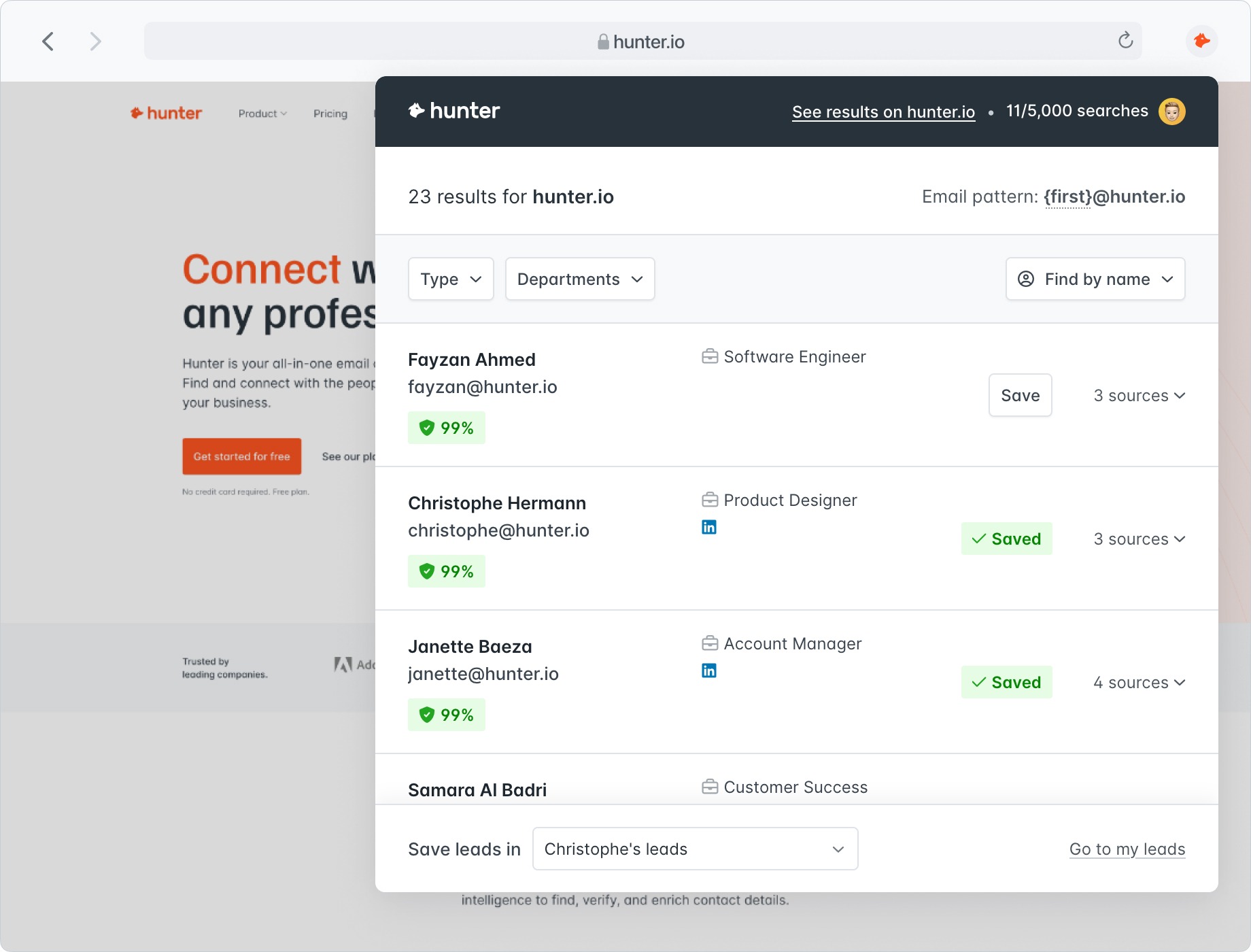
Hunter is among the simplest Snov.io alternatives, with an email discovery verification tool that helps B2B organizations find professional email addresses linked to specific companies or domains. It pulls data from public sources, so sales teams can identify who to contact within a business.
Its lightweight design makes it suited for individuals, startups, or small teams that need to find and verify emails without the complexity of full sales platforms. The trade-off is in its functionality, as it lacks in-depth intent signals or inbound prospecting.
Key Features
- Domain Search: Finds all known email addresses associated with a company domain, so you can quickly map out potential contacts
- Email Finder: Allows you to search for a specific person’s email using their name and company, helping you reach identified prospects directly
- Sequences: Includes simple email campaign functionality for sending cold emails without needing a separate tool
Pricing
- Free ($0/month): Includes 50 monthly credits, 1 connected email account, and basic email finding and verification features
- Starter ($49/month): Offers 2,000 credits per month, lead enrichment, and connects 3 email accounts
- Growth ($149/month): Offers 10,000 credits per month, 10 connected email accounts, and all features in the Starter plan
- Scale ($299/month): Offers 25,000 credits per month, 20 connected email accounts, and all Growth plan features
- Enterprise (Custom): Flexible plan with custom credits, team setup, and support for large-scale usage
Pros
- Simple, easy-to-use interface
- Fast and reliable for small-scale domain search
- AI writing assistant
Cons
- Pricing becomes expensive with higher usage
- Limited features beyond basic email finding and verification
- Some users report a narrow contact database that excludes startups
6. Lusha

Lusha is a B2B contact and company data platform built for scalable prospecting and list building. It gives users access to a large database of verified emails and direct dials across industries. Although a good choice for sales teams that want structured outbound campaigns rather than manual searching, it can also be pricey and has varying accuracy rates.
Key Features
- LinkedIn Chrome Extension: Pulls contact details directly from LinkedIn profiles, including emails and phone numbers, without breaking user workflow
- Buying Signals: Tracks signals such as job changes, company growth, and active research, helping you reach prospects when they’re more likely to convert
- AI-Powered Conversation Intelligence: Records, summarizes, and analyzes sales calls automatically using AI
Pricing
- Free ($0/month): Offers 40 credits per month, 1 seat, and no credit card required
- Starter ($49.90/month): Offers 400 credits per month, AI assistance, and bulk enrichment
- Pro ($69.90/month): Offers 600 credits per month, 2 free seats, API, and automated workflows
- Premium ($399.90/month): Offers 3,400 credits per month, 5 free seats, credit allocation, and advanced API
- Scale (custom pricing): Offers Premium features plus custom credits, SSO, and advanced compliance.
Pros
- Easy to use with a simple, intuitive interface
- Accurate contact data
- Fast access to emails, especially via LinkedIn
Cons
- Credit limits can feel restrictive for larger campaigns
- Pricing can become expensive as usage increases
- Several users report email inaccuracies
7. UpLead
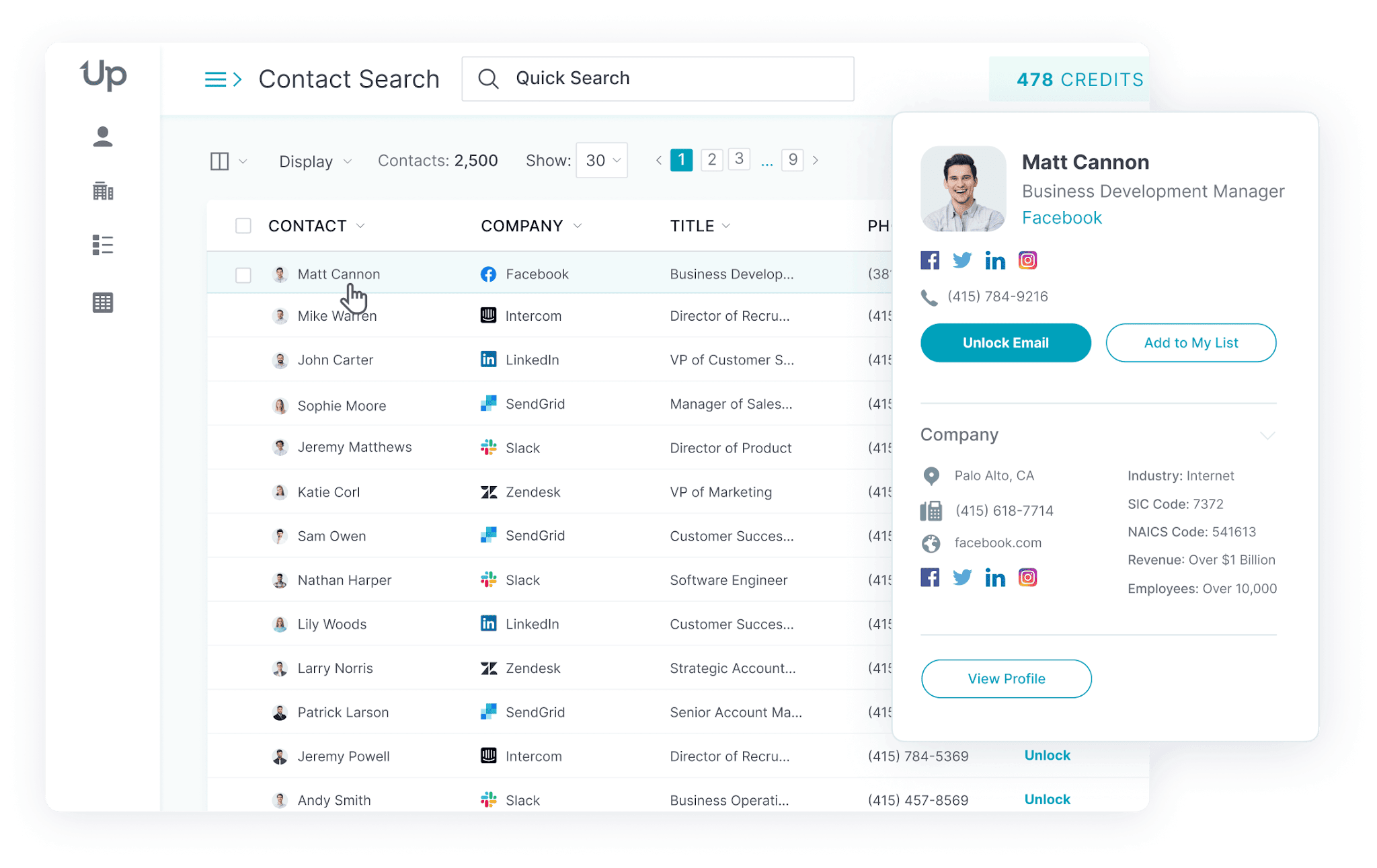
UpLead is a B2B data platform that focuses on providing high-accuracy, real-time-verified contact data. Sales teams get detailed filters for building precise, targeted lists, and can export this data directly into their outreach tool.
It’s a great choice for teams that want clean, reliable leads without the complexity of full outbound platforms. Compared to RB2B, however, it lacks inbound visitor identification and coverage for niche roles.
Key Features
- Real-Time Email Verification: Validates email before export, leading to fewer bounce rates or failed campaigns
- Advanced Lead Filtering: Lets users narrow down prospects by specific criteria, from location and industry to company revenue and size
- Technographics: Tracks web and mobile technology and generates leads based on which tools and systems companies use
Pricing
- Free Trial: Offers 5 credits, email verification, and a Chrome extension available for 7 days
- Essentials ($99/month): Offers 170 credits per month, verified emails, and CRM integration.
- Plus ($199/month): Offers 400 credits per month, Essentials plan features, technographics, data enrichment, and advanced filters.
- Professional (custom pricing): Designed for usage with custom credit volumes and advanced intelligence
Pros
- User-friendly interface
- Strong search and filtering options
- Available in 200+ countries
Cons
- Smaller database compared to larger competitors
- Limited coverage in niche industries
- Some users report occasional errors in data
8. Kaspr

Kaspr is particularly helpful for LinkedIn-first European prospecting, giving users instant access to verified emails and phone numbers while viewing profiles. It works mainly through a Chrome extension, making it a fast way for sales teams to enrich leads in real time.
It’s a good fit for teams doing high-volume automated LinkedIn prospecting rather than entire outbound campaigns, but it offers less visibility into broader cross-channel behavior.
Key Features
- LinkedIn Chrome Extension: Pulls prospects’ emails and phone numbers as you view LinkedIn profiles in one click
- Real-Time Contact Enrichment: Automatically adds verified contact details while browsing potential leads
- Lead Saving and Export: Stores prospects for later outreach or exports directly to your CRM for easy tracking
Pricing
- Free ($0/month): Offers 15 B2B email credits, 5 phone credits, and 5 direct email credits.
- Starter ($65/month): Offers unlimited B2B email credits, 100 phone credits, and 5 direct email credits.
- Business ($99/month): Offers unlimited B2B email credits, 200 phone credits, and 200 direct email credits.
- Enterprise (custom pricing): Built for large teams. Offers unlimited phone credits, unlimited B2B email credits, intent data, and enterprise-level compliance
Pros
- LinkedIn-based workflow
- Simple setup and onboarding
- Fast access to verified contacts
Cons
- Limited credits for large-scale needs
- Incomplete data coverage
- Costs add up quickly with usage
9. Warmly
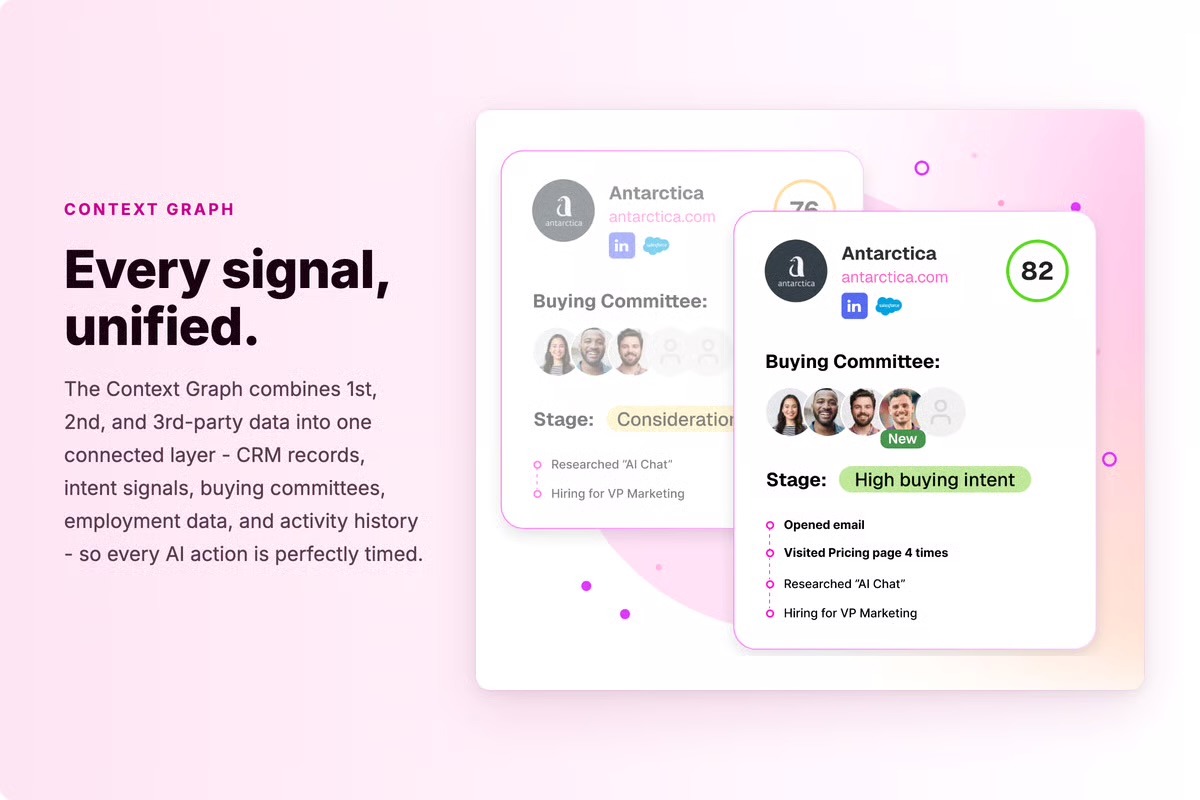
Warmly is a go-to-market (GTM) B2B platform that helps identify, track, and act on intent data using AI agents. Its automation tools support visitor identification, account tracking, outreach, and follow-up campaigns.
With Warmly, teams can respond to inbound activity more efficiently instead of manually tracking engagement. However, its occasional inaccuracies could lead to less reliable lead prioritization.
Key Features
- Inbound Agent: Identifies website visitors in real time and shows which companies are engaging with your site, and books direct meetings automatically
- TAM Agent: Tracks target accounts across your total market and highlights engagement signals from those companies
- Retargeting: Supports follow-up campaigns for visitors who previously interacted with key pages
Pricing
- TAM Agent: Starting at $15,000 yearly. Includes full enrichment and intent signals
- Inbound Agent: Starting at $30,000 yearly. Includes visitor identification, real-time alert, and follow-ups
- Full GTM: Custom pricing. Offers both Agents in a unified system
Pros
- Easy setup and onboarding
- Real-time alerts
- Visitor identification
Cons
- Data accuracy may vary
- Opaque pricing for full service
- Some users report software bugs
10. Leadfeeder (DealFront)

Leadfeeder is a Europe-focused sales intelligence and pipeline generation platform that combines website visitor identification with intent data. It identifies companies visiting your site, analyzes their behavior, and prioritizes accounts already showing buying signals.
Rather than cold outreach, Leadfeeder focuses on high-fit accounts from the start, especially for European companies, though it stops at the company level rather than true person-level identification.
Key Features
- AI Insights: Uses AI to show company activity on your site, so you can prioritize accounts most likely to convert
- Browser Extension: Allows access to company data and insights directly while browsing LinkedIn or websites
- Account Intelligence: Enriches your CRM with real-time company data, buyer signals, and contact details for a unified workflow
Pricing
- Lite (€0/month): Free plan with up to 100 company identifications per month, basic company details, and a 7-day data history
- Website Visitor Identification (starting at €141/month): Includes unlimited company identifications, full visitor history, lead scoring, and CRM/Slack integrations.
- Platform (starting at €519/month): Offers full sales intelligence features, including database access, advanced filtering, AI enrichment, and deeper workflow capabilities
Pros
- Comprehensive, compliant European data coverage
- Strong lead identification
- Helpful intent insights for targeting
Cons
- Weaker coverage for smaller companies
- Can be pricey, especially for startups and small businesses
- Limited person-level identification
11. Cognism
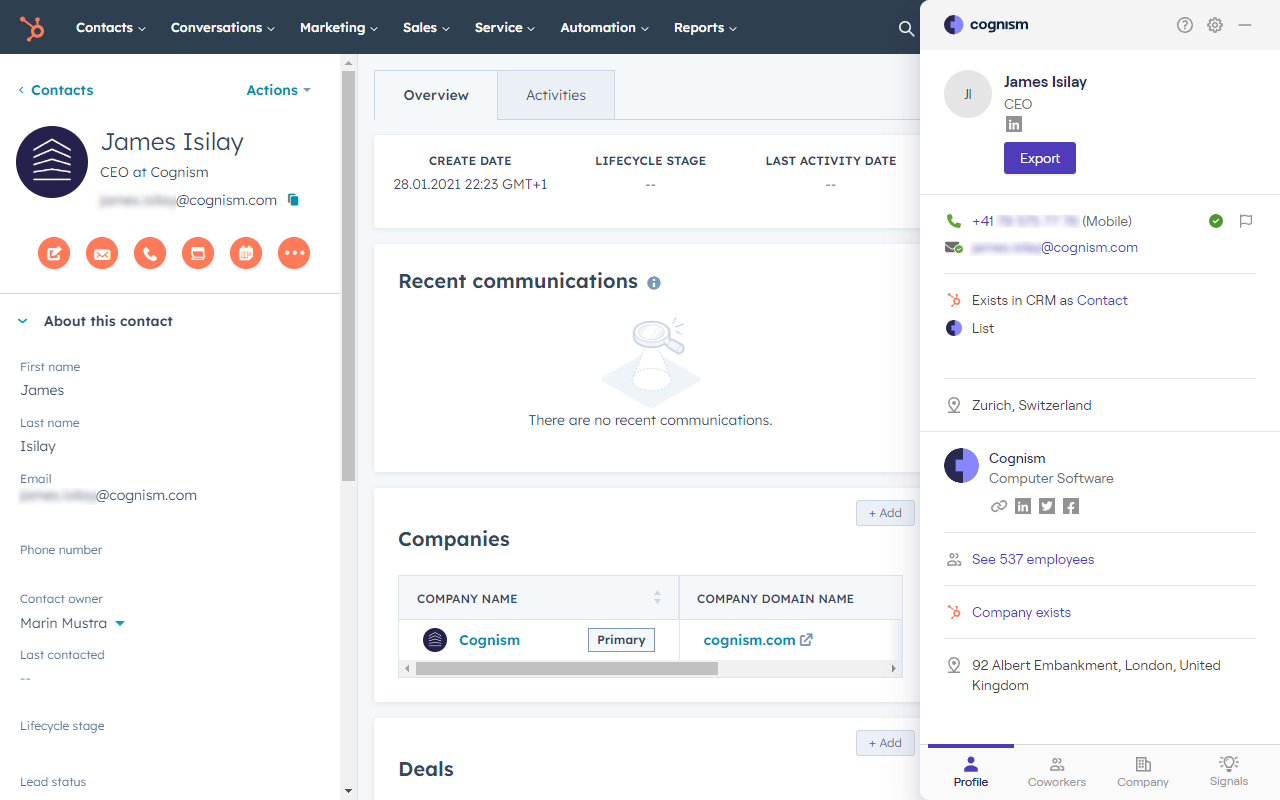
Cognism is a B2B sales intelligence platform that offers access to verified emails, phone numbers, and company data to reach stakeholders. It’s especially strong in the EMEA region, where data compliance and accuracy are harder to get right.
Its core strength is high-quality, compliant contact data with buying signals such as job changes, hiring, or intent. However, users on a smaller budget find its pricing harder to evaluate or plan around.
Key Features
- LinkedIn Verified Contact Data (Diamond Data®): Provides phone-verified mobile numbers and emails to improve connect rates and reduce guesswork
- Advanced Prospecting Filters: Lets you search by job title, company size, location, and revenue to match your ICP more closely
- Data-as-a-service: Delivers data directly into your CRM, data warehouse, or internal systems via API or scheduled pipelines
Pricing
Cognism has no public pricing plans.
Pros
- Strong European coverage and compliance
- Quality, verified contacts
- Centralized workflow
Cons
- Limited data coverage in the Middle East and Africa
- No transparent pricing
- Some users still report missing or inaccurate phone numbers
12. 6sense
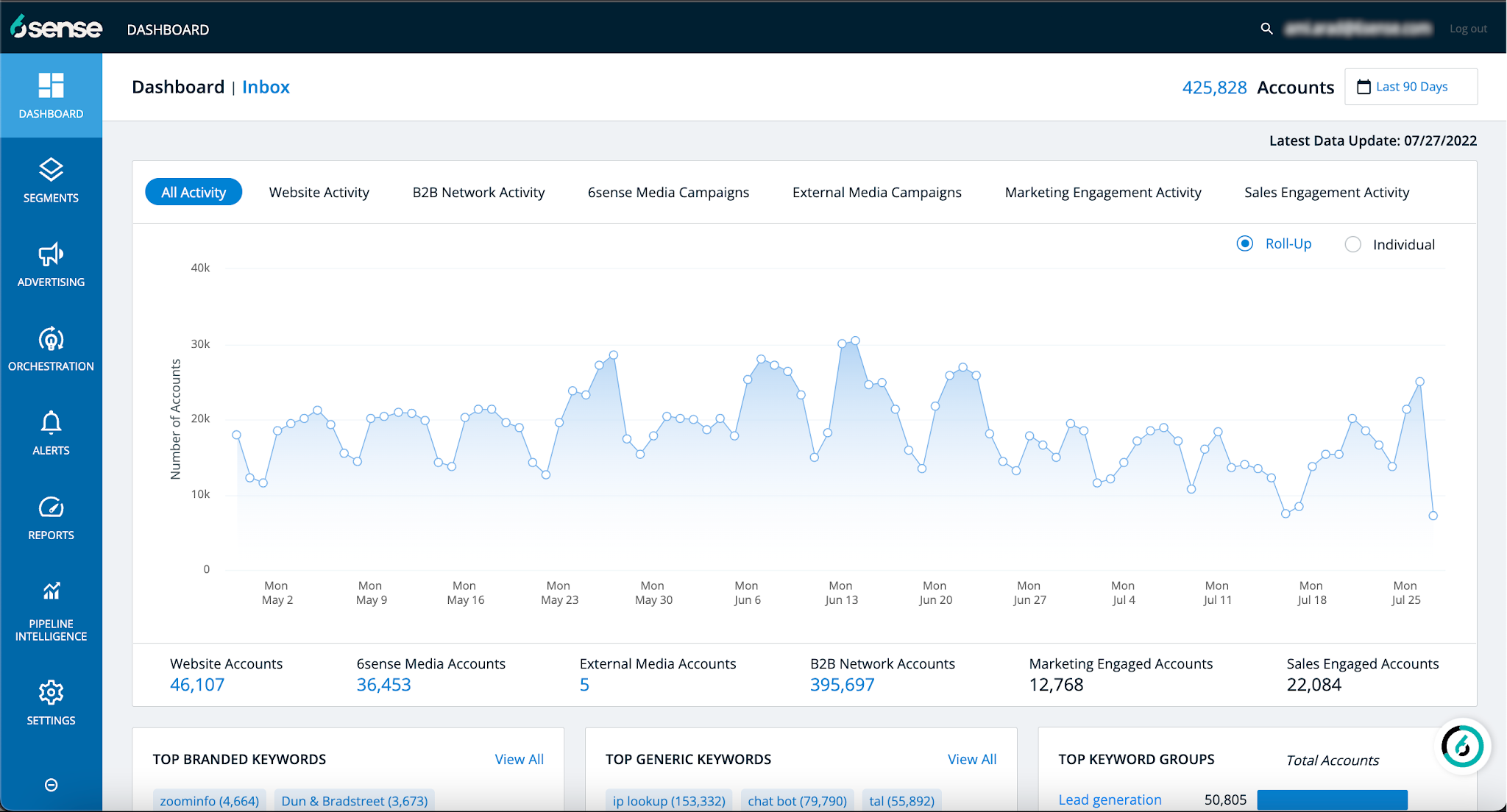
6sense is a revenue intelligence platform that uses AI to analyze buying signals across the web, predicting which companies are most likely to become customers. It helps sales and marketing teams prioritize accounts based on intent, engagement, and buying stage, rather than static leads.
With 6sense, the goal is to connect B2B efforts directly to pipeline, conversion, and revenue, but its complexity can make it less usable for teams that need simpler execution.
Key Features
- Predictive Intent Data: Identifies accounts actively researching your category for early outreach and marketing
- AI-Powered Account Scoring: Ranks accounts based on likelihood to convert, helping sales teams focus on high-value opportunities
- Account Identification: Reveals companies visiting your website without direct form filling
Pricing
Pricing is custom-based and depends on usage.
Pros
- Strong predictive analytics and intent data
- Advanced analytics and reporting
- Comprehensive buyer journey insight
Cons
- Opaque pricing and high cost
- Complex setup and steep learning curve
- Data can feel overwhelming without clear workflows
13. Demandbase
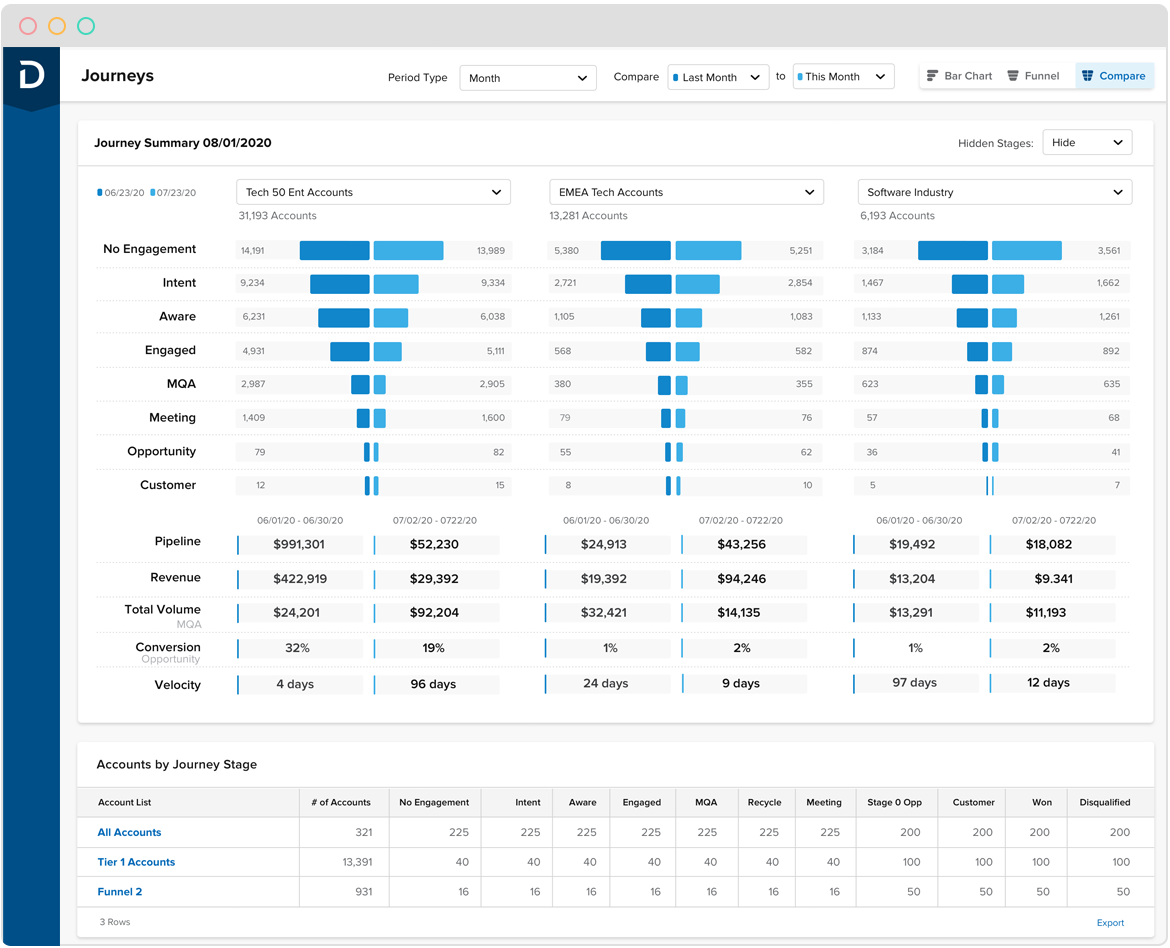
Demandbase is an enterprise sales intelligence and account-based marketing (ABM) tool that identifies, prioritizes, and engages high-value accounts based on your defined buying signals. It combines intent data, visitor identification, and account insights into a single, ready-to-use system.
This proves useful for large B2B organizations with complex buying cycles that require shared account intelligence between sales and marketing. However, smaller teams may struggle with its enterprise focus.
Key Features
- AI-Powered Intelligence: Combines intent signals and AI models to identify, prioritize, and score high-value accounts in real time
- Account-Based Experience Orchestration: Unifies sales and marketing activity around target accounts for coordinated, personalized buyer engagement
- B2B Advertising: Runs account-based ad campaigns across channels for entire buying communities rather than individuals only
Pricing
Demandbase pricing is quote-based only.
Pros
- Strong account-based targeting and intent data
- Shared insights for sales and marketing
- Robust analytics and reporting for pipeline performance
Cons
- Complex setup and steep learning curve
- No free or trial plan
- Opaque, expensive pricing
14. LeadIQ
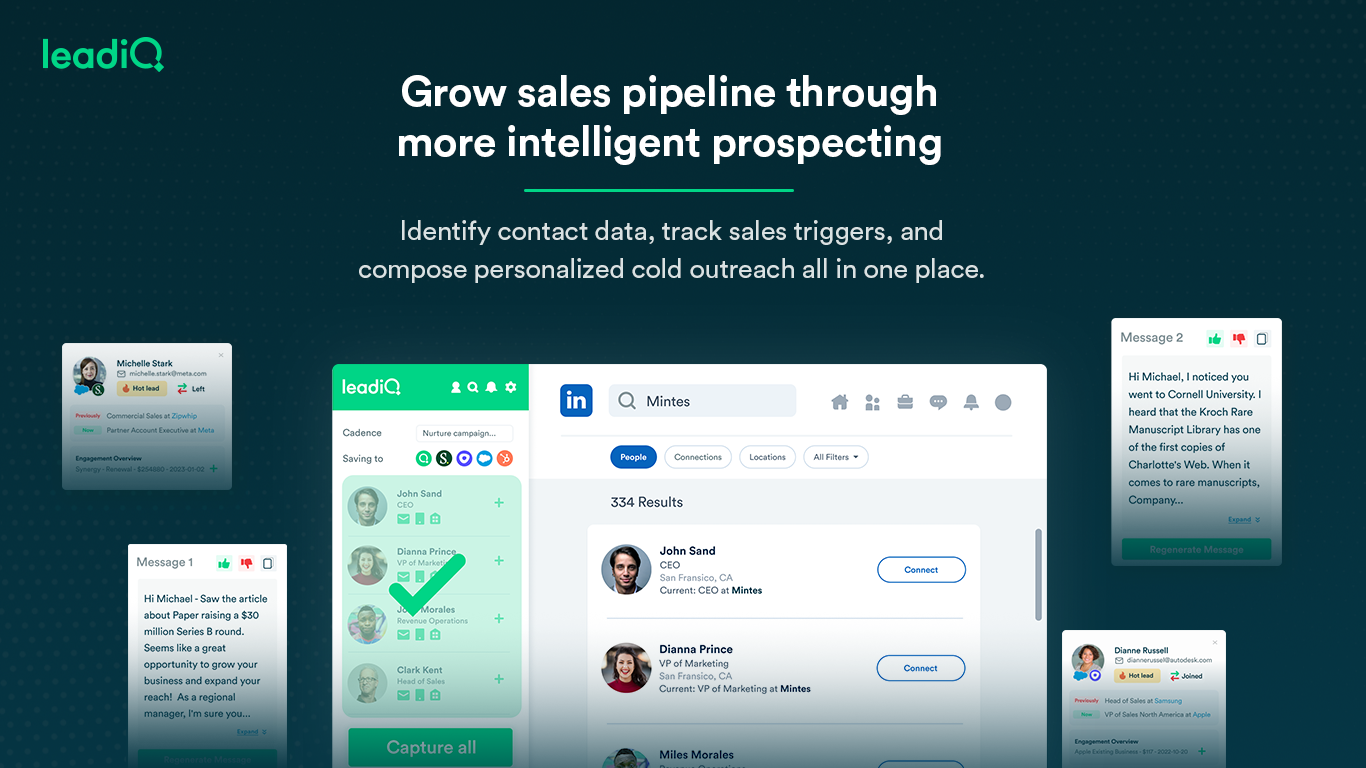
LeadIQ is designed to help sales teams find leads, enrich them, and export the leads into their workflow. It focuses on AI-powered contact sourcing, tracking sales triggers, and personalizing outreach from one platform.
At its core, it aims to speed up manual prospecting and reduce admin time, especially for sales reps working directly on LinkedIn. Even so, for reliable, deeper intent data, it may offer less value compared to competitors.
Key Features
- Prospecting Hub: Finds, captures, and engages leads in one flow for a streamlined, organized process
- Data Enrichment: Updates CRM with accurate data, buying signals, and alerts, so you reach out on time
- AI-Powered Lists: Build lead lists directly inside your AI workspace using natural language, no complex filters or tab switching necessary
Pricing
- Free: Allows one user and 50 credits
- Pro ($20/month): Allows one user, buying signals, technographics, CRM enrichment, and people search
- Enterprise (custom pricing): Pro features plus AI prospecting, analytics, and advanced admin settings
Pros
- Seamless browser extensions
- Fast prospecting
- Easy-to-use interface
Cons
- Some users report inconsistent or missing data
- Limited native outreach
- Phone numbers may be inaccurate
15. RocketReach
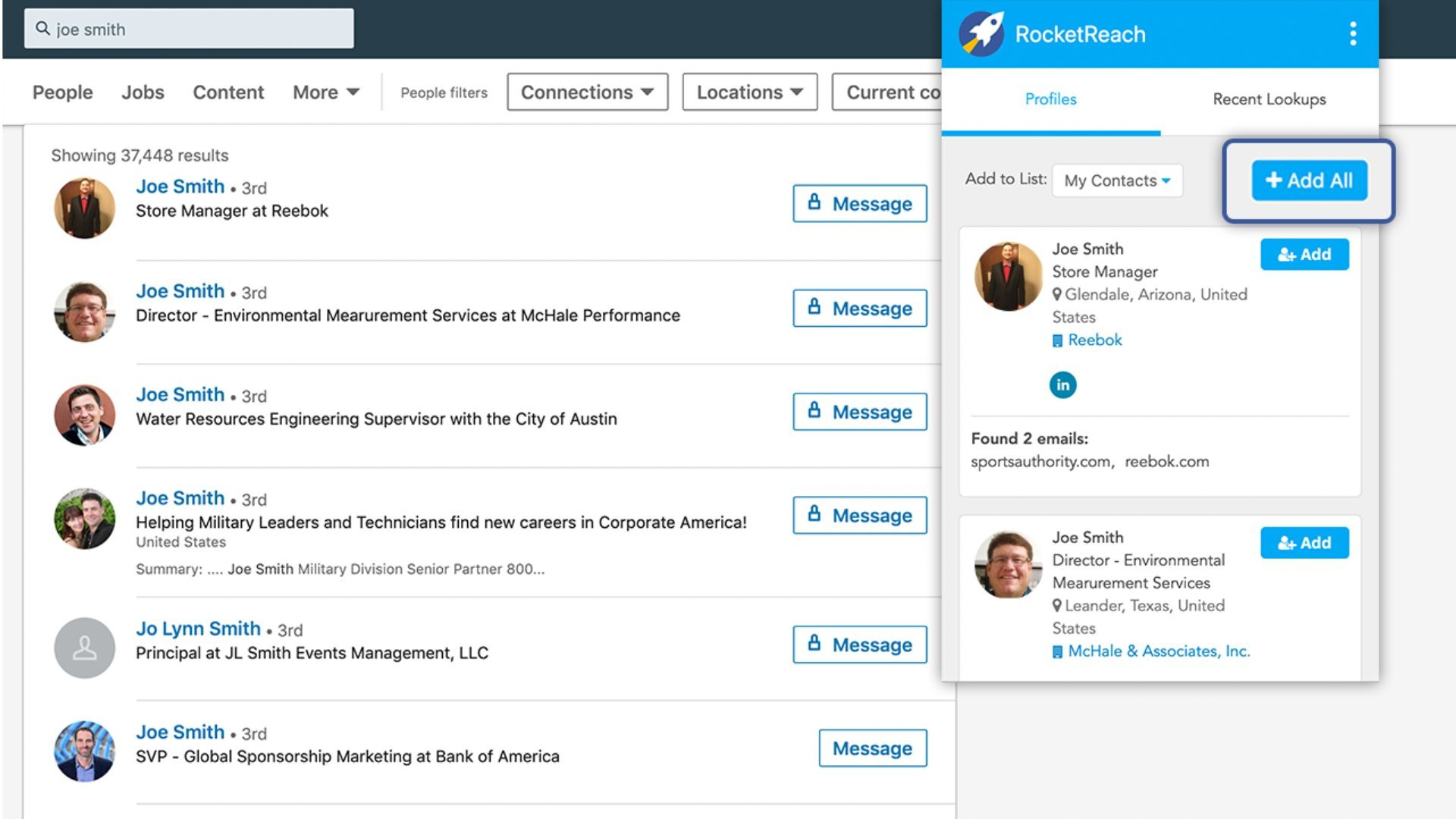
RocketReach is a contact data platform built to verify email, phone numbers, and social media profiles of professionals across industries. It prioritizes fast, flexible search over structured workflows or heavy automation.
Besides reaching and engaging stakeholders, it is also useful for talent discovery and sourcing, but lacks in-depth buyer signals or advanced features, especially at basic plans.
Key Features
- Global Database: Provides access to over 700 million verified profiles and filters for highlighting possible targets
- Multi-Channel Contact Data: Surfaces multiple communication channels, including email, social media, and phone numbers, in one search
- In-Platform Messaging: Provides messaging services and manages follow-ups right from the RocketReach platform
Pricing
- Essentials ($49/month): Offers 70 email lookups and exports monthly
- Pro ($99/month): Offers 200 emails plus phone lookups and exports monthly
- Ultimate ($209/month): Offers 1000 emails plus phone lookups and exports monthly
Pros
- Seamless browser extensions
- Fast and efficient contact finding
- Easy, straightforward interface
Cons
- Information may be inconsistent or outdated
- Advanced features are unavailable in the Essentials plan
- Can be pricey with high usage
16. Seamless.ai
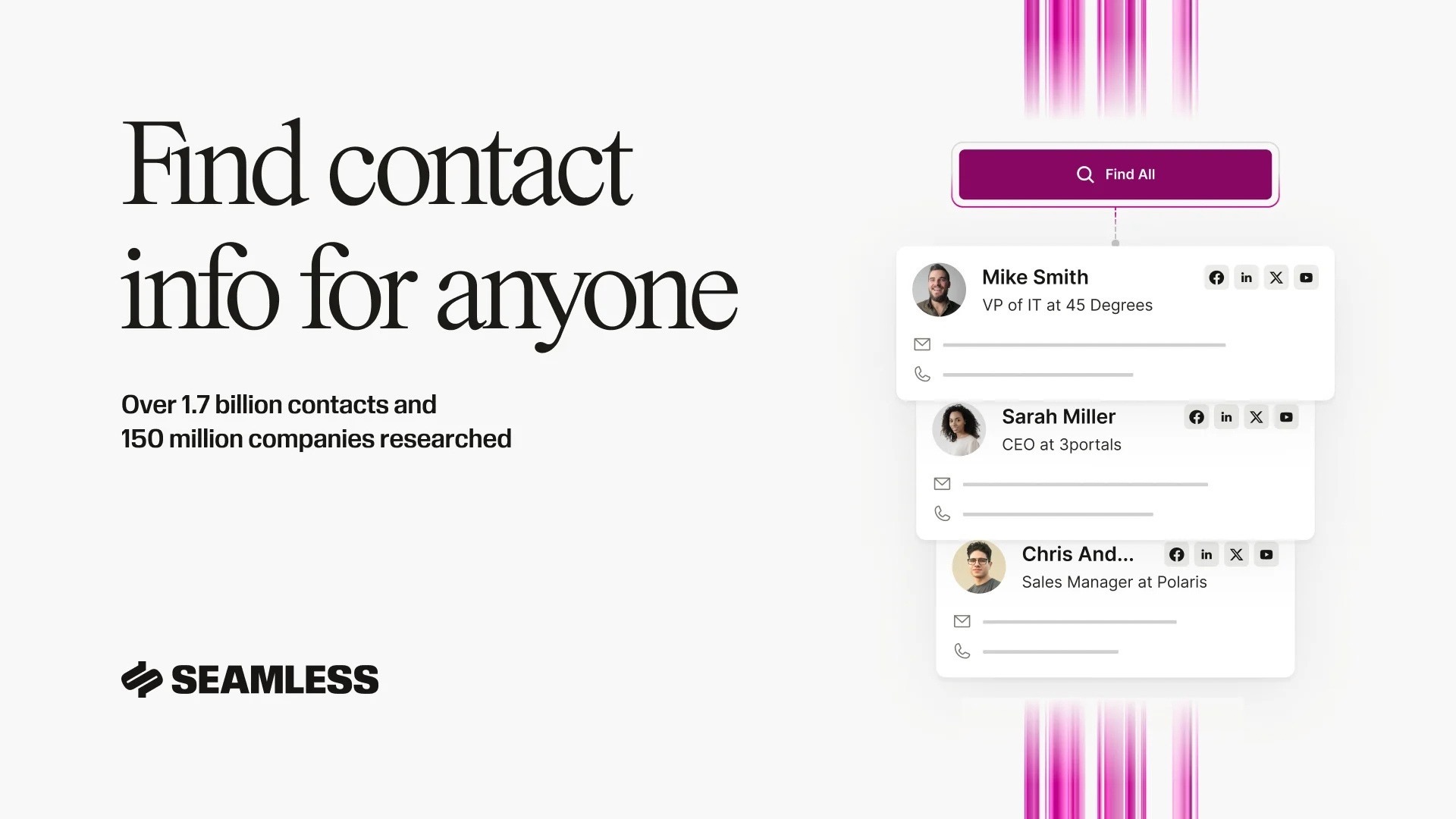
Seamless.ai is a sales intelligence service that finds emails, phone numbers, and company data for outbound prospecting. It’s positioned as a real-time search engine for contact identification, constantly updating its database using AI instead of relying on static lists.
It’s best suited for high-volume outbound teams that prioritize speed and quantity in lead generation. Regardless, its data accuracy varies compared to more verified, compliance-heavy platforms.
Key Features
- Prospector: Lets users search for verified B2B emails and phone numbers using dynamic filters for targeted delivery
- AI Agents: Automates core workflows like research, follow-ups, list building, and outreach sequencing for speed at scale
- Engagement Hub: Provides personalized AI-powered email, dialing, and social media outreach, improving messaging relevance and open rates
Pricing
- Free ($0/month): Offers 1000 credits to one user, granted monthly
- Pro (custom pricing): Offers data enrichment, an AI assistant, and a customizable number of users
- Enterprise (custom pricing): Offers Pro features plus API, additional user support, and unlimited users
Pros
- Large database supports lead generation at scale
- Seamless Chrome extension for LinkedIn
- Fast, easy contact discovery
Cons
- Data accuracy may vary
- Opaque pricing
- Some users report occasional bugs
Drive Pipeline With Stronger Insights
While Snov.io works for basic prospecting, it is largely limited to static data and outbound lists. Modern sales teams need real-time signals, better intent, and clearer buying context to compete. For teams that require higher pipeline quality and revenue, Snov.io alternatives become necessary.
RB2B goes beyond email finding and cold leads, showing you who is already on your website in real time. With this focus, you can engage ready buyers and guarantee steady conversions instead of guessing. Sign up to RB2B for free and begin turning anonymous traffic into actionable, high-intent leads today.
Frequently Asked Questions
1. What are the best Snov.io alternatives for B2B sales teams?
The best Snov.io alternatives include tools like RB2B, Apollo, Cognism, and ZoomInfo. Each tool’s best use case differs, from outbound prospecting and data enrichment to real-time buyer intent.
2. Why do companies look for Snov.io alternatives?
Most teams outgrow Snov.io when they need more than email discovery, such as intent signals, accurate phone data, or real-time lead identification. Alternatives offer deeper insights that go beyond list building and actively improve conversion rates.
3. How is RB2B different from Snov.io?
Snov.io focuses on finding and contacting cold prospects using databases, while RB2B identifies real people visiting your website in real time. This makes RB2B better for capturing high-intent buyers already engaging with your brand.
4. Is Snov.io still good for outbound prospecting?
Yes, Snov.io is still useful for basic email finding and small-scale outbound campaigns. However, larger teams often switch to alternatives with better data accuracy and intent-based targeting.
5. What should I look for in Snov.io alternatives?
Look for tools that offer better data accuracy, real-time intent signals, and seamless CRM integration. However, the right choice depends on your organization’s specific needs, whether outbound prospecting or converting existing website traffic.