
Quick Summary
UpLead pricing is based on a credit system that may work for small teams but presents limitations as their needs grow. This article reviews UpLead's pricing model, outlines potential limitations and additional costs, and compares it with RB2B as an alternative for scaling GTM teams.
Why Do Teams Choose UpLead in 2025?
UpLead is a B2B lead generation tool known for its extensive database of verified company and contact information, including real-time email addresses and phone numbers. Many teams like it as it provides a straightforward way to find, connect with, and convert prospects.
However, for many teams, selecting B2B data tools goes beyond database size and filter functionality. Instead, factors such as scalability and data integrity matter to them.
So how does UpLead hold up when these factors are put to the test? Does its pricing align with how teams actually use the product, and can it scale without friction as needs grow?
In this article, we will explore how UpLead delivers value to teams, its limitations, and why many teams ultimately choose RB2B as a more practical, long-term option to make lead generation easier.
Why Listen to Us
At RB2B, we work with B2B teams that regularly evaluate and use data platforms in the sales and marketing workflows. This provides a practical view of how pricing models perform beyond the surface, especially as usage scales and costs increase over time.
An Overview of UpLead's Pricing Plans
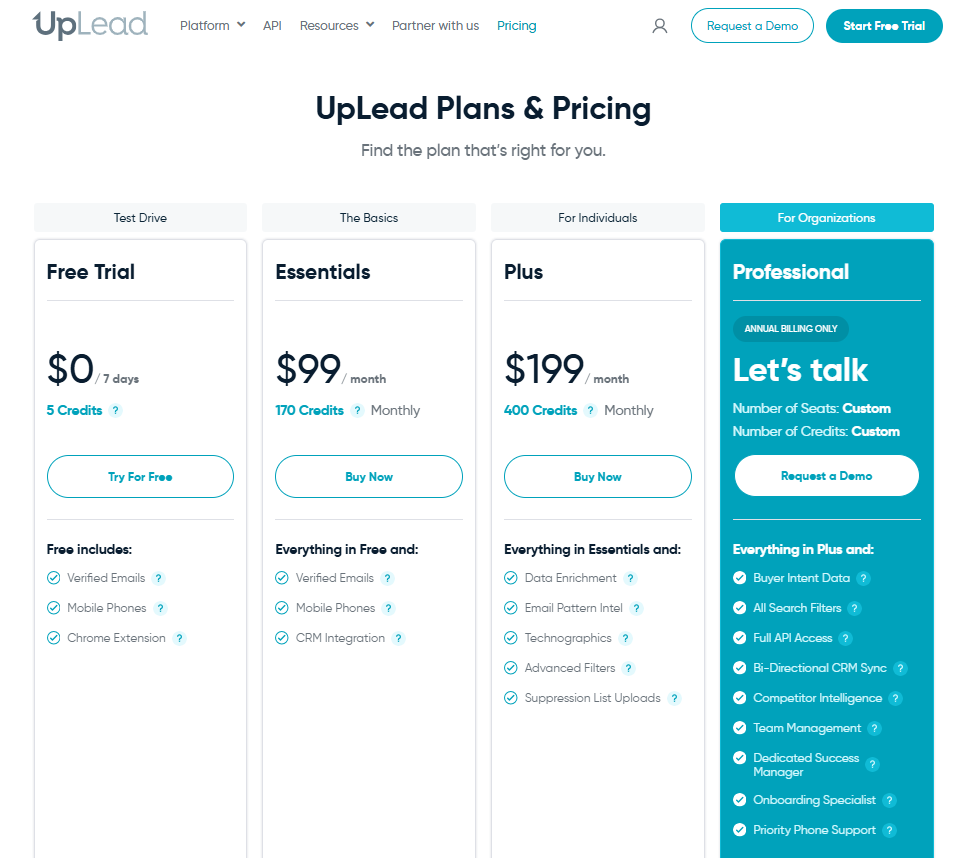
Here is a quick overview of UpLead's pricing plans, their features, and who they are best suited for.
What Do You Actually Get at Each UpLead Pricing Tier?
UpLead offers three pricing plans that vary by features and usage. This section walks you through what each plan includes and what teams should pay attention to.
1. Essentials Plan
UpLead's Essentials plan starts at $99/month and provides access to the core platform, basic CRM integrations, and its verified lead database with company-level data. It’s designed for individuals or very small teams who want to test basic prospecting workflows for their sales outreach strategy.
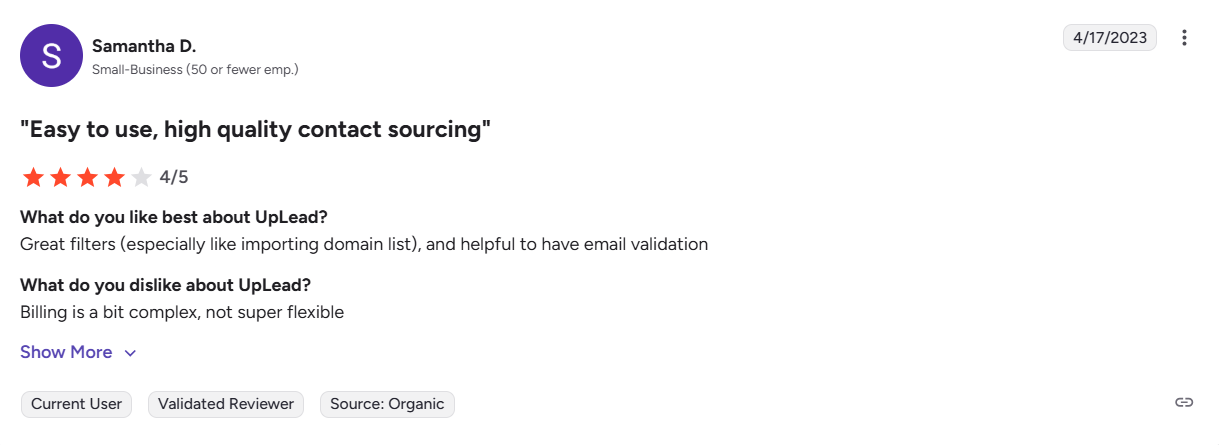
However, usage is limited to a single user, and you only get 170 credits/month; so if you're working with larger contact lists, based on user reports, you'd need to purchase additional credits for $0.60/credit. Thus, many teams often have to move up to the Plus plan or find alternative options as their needs grow.
2. Plus Plan
Starting at $199 per month, UpLead’s Plus plan builds on the Essentials plan with real-time lead enrichment, access to the prospecting platform, and more advanced search filters. It supports users who need more refined targeting and data enrichment.
That said, the plan is not without its limitations. Usage is limited to a single user, not all search filters are included, and priority customer support is reserved for higher tiers. For teams that need access to more features or hands-on support, Plus may not be the best fit.
3. Professional Plan
With UpLead's professional plan, you gain access to the platform's full capabilities, including all search filters, priority customer support, competitor intelligence, and B2B intent data. Pricing and credit allowances are custom, making it easy for teams to tailor the plan to their needs.
The Professional Plan is great for large organizations with sufficient funds. For smaller teams, however, the custom pricing model and data-based credit usage can be somewhat unpredictable, especially if data consumption increases over time.
Features of UpLead
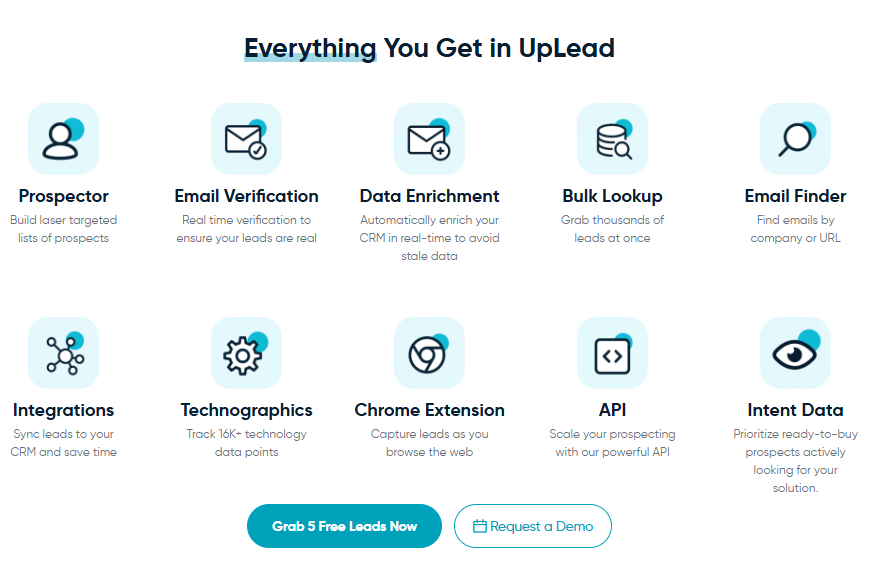
Here are a few reasons why some B2B teams like to use UpLead:
1. Smart Data Enrichment
UpLead lets you fill in missing contact and company details like emails, phone numbers, and firmographics, either directly in the platform or through its API. However, it's difficult to use this feature for large lists as enrichment and API access consume credits.
2. Real-Time Email Verification
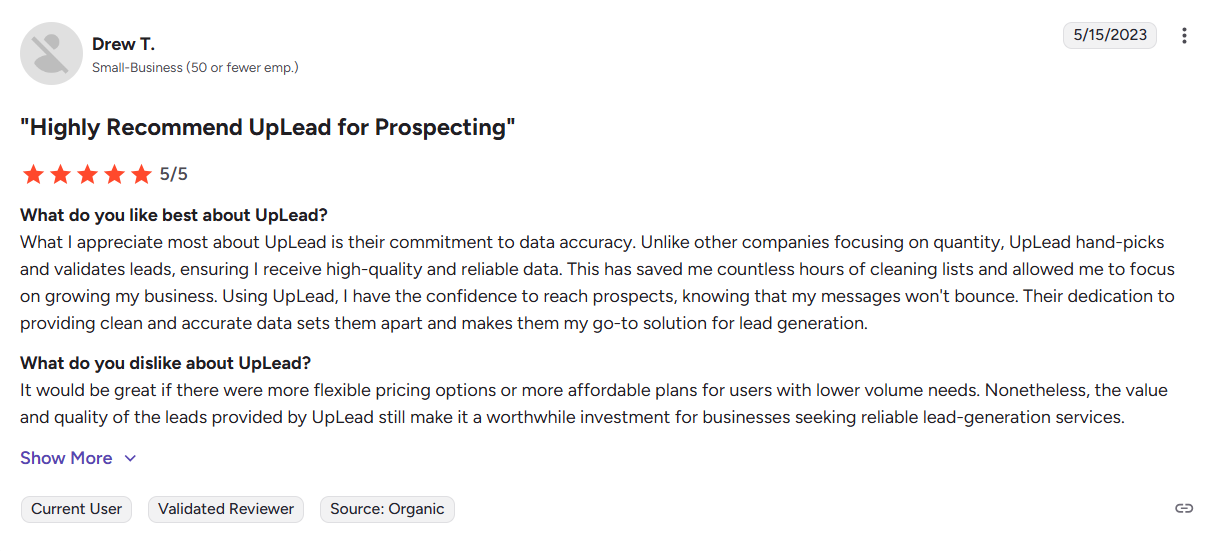
UpLead verifies and cleans emails in real time before any export, helping reduce bounces and protect deliverability. It filters out any invalid addresses, only revealing to users the valid emails so there’s less manual cleanup. It's important to note that you're charged to verify the emails, and sometimes the data is inaccurate, so you end up paying for an invalid email.
3. Buyer Intent Data
With UpLead’s intent data, you can see which prospects are showing signs of active research, react to buyer intent signals early, and optimize your sales cycle. This feature is built into search filters, making it powerful for B2B teams, but only users on higher-tier plans can access it.
4. Lead Generation Prospector
Prospector lets you build lead lists using filters for role, company size, industry, location, and tech stack. With it, you can combine filters and export contacts for outreach, making list building require little to no manual effort. Still, because search results and exports are limited by credits and filter depth (especially on lower plans), teams with large-scale or highly specific needs may find the process too costly.
How Does RB2B Deliver Better Value Than UpLead?
RB2B is designed to help B2B teams identify anonymous website visitors, understand buying intent, and route high-intent signals into sales and email marketing workflows without relying on credit-based data consumption. It addresses the core issues buyers experience with credit-based platforms by focusing on efficiency, predictability, and impact.
Here are 4 ways RB2B delivers better value than UpLead.
1. Reduced Spend on Low-Intent Contacts
RB2B minimizes wasted budget by prioritizing data tied to buyer intent. Teams are less likely to spend on contacts that do not align with their target audience, improving overall cost efficiency.
2. Aligned Pricing with Teams
Instead of charging per contact, RB2B aligns pricing with how revenue and marketing teams actually operate. This allows teams to focus on execution, messaging, and pipeline development rather than monitoring credit consumption.
3. Predictable Costs That Offer Impact
RB2B's pricing structure supports clearer budgeting and forecasting. Predictable costs reduce internal friction, making it easier for teams to plan, justify spend, and scale confidently.
4. Lower Operational Friction
By removing the need to manage credits, RB2B simplifies workflows. Fewer restrictions and surprises allow teams to focus on performance rather than platform limitations.
RB2B vs UpLead Pricing
Below are 5 key differences between RB2B and UpLead pricing models:
Converting Prospects to Sales with RB2B
UpLead can be a practical option for small teams that are comfortable operating within a credit-based pricing model. As usage increases, however, credit limits, feature restrictions, and unpredictable costs often become harder to manage.
RB2B follows a different pricing logic. Its pricing model emphasizes outcomes over access. Instead of charging based on contact volume or enrichment actions, it focuses on identifying and activating real buyer intent which helps organizations control costs while supporting sustainable growth. Start for free at RB2B and identify real people interested in your services and convert them to high-value leads.